

Roasted Zucchini with Za’atar and Garlic Yogurt Sauce


This post may contain affiliate links. As an Amazon Associate, I earn from qualifying purchases. See my Affiliate Disclosure .
Roasted zucchini can earn the same praise grilled zucchini always gets, in a restaurant or on a home grill. Not everyone has a grill, but most of us have an oven with a broiler, and that’s all this recipe needs. The zucchini goes under the broiler first, until the edges blister and char, then drops down to a slower roast so the inside turns tender without ever going to mush.

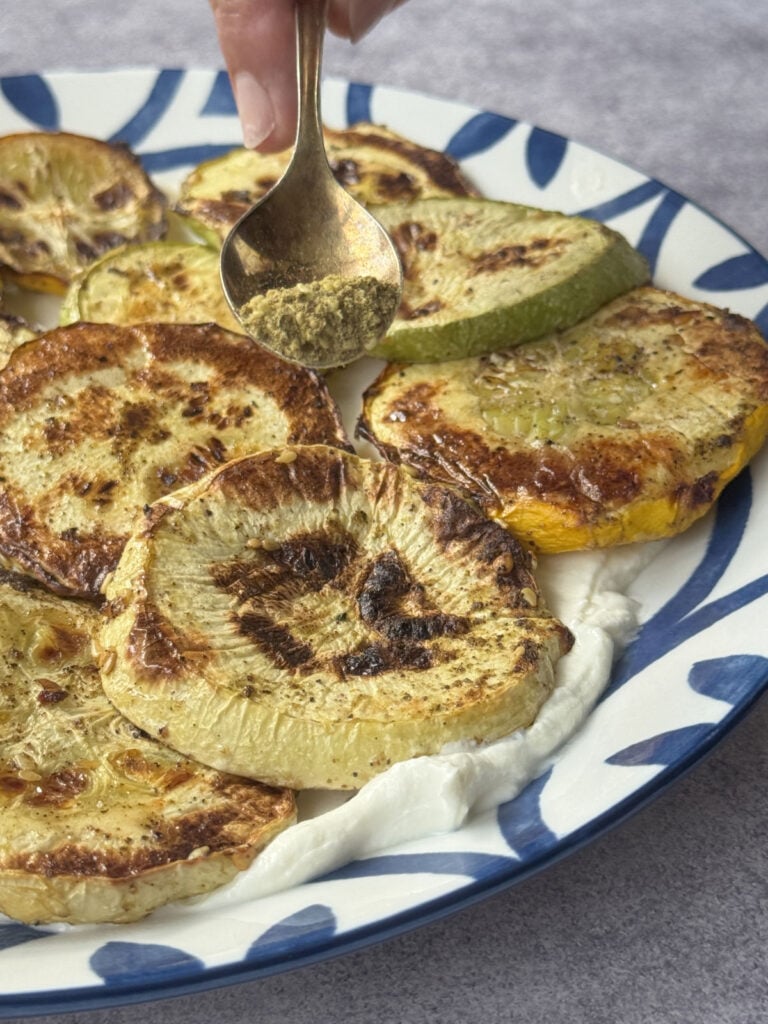
The next trick for roasted zucchini is a herb and garlic marinade. I chose za’atar to bring tang and savory notes to the natural sweetness of zucchini. Za’atar is a Middle Eastern spice blend built on dried thyme, sumac, and toasted sesame, and it goes really well with roasted vegetables.
I lean on it here against cool, garlicky lebneh, the strained yogurt that turns a simple roasted vegetable into a full plate. Blistered, tender zucchini against a cool, tangy sauce is the whole idea.
This comes together quickly and forgives you if your quantities aren’t exact, which makes it a natural weeknight vegetable side.
If zucchini is piling up on your counter this week, this is where it should go.

Menu Suggestion: Make It a Meal
Pair this za’atar-roasted zucchini with a few easy additions for a full Armenian-and-Middle-Eastern table.
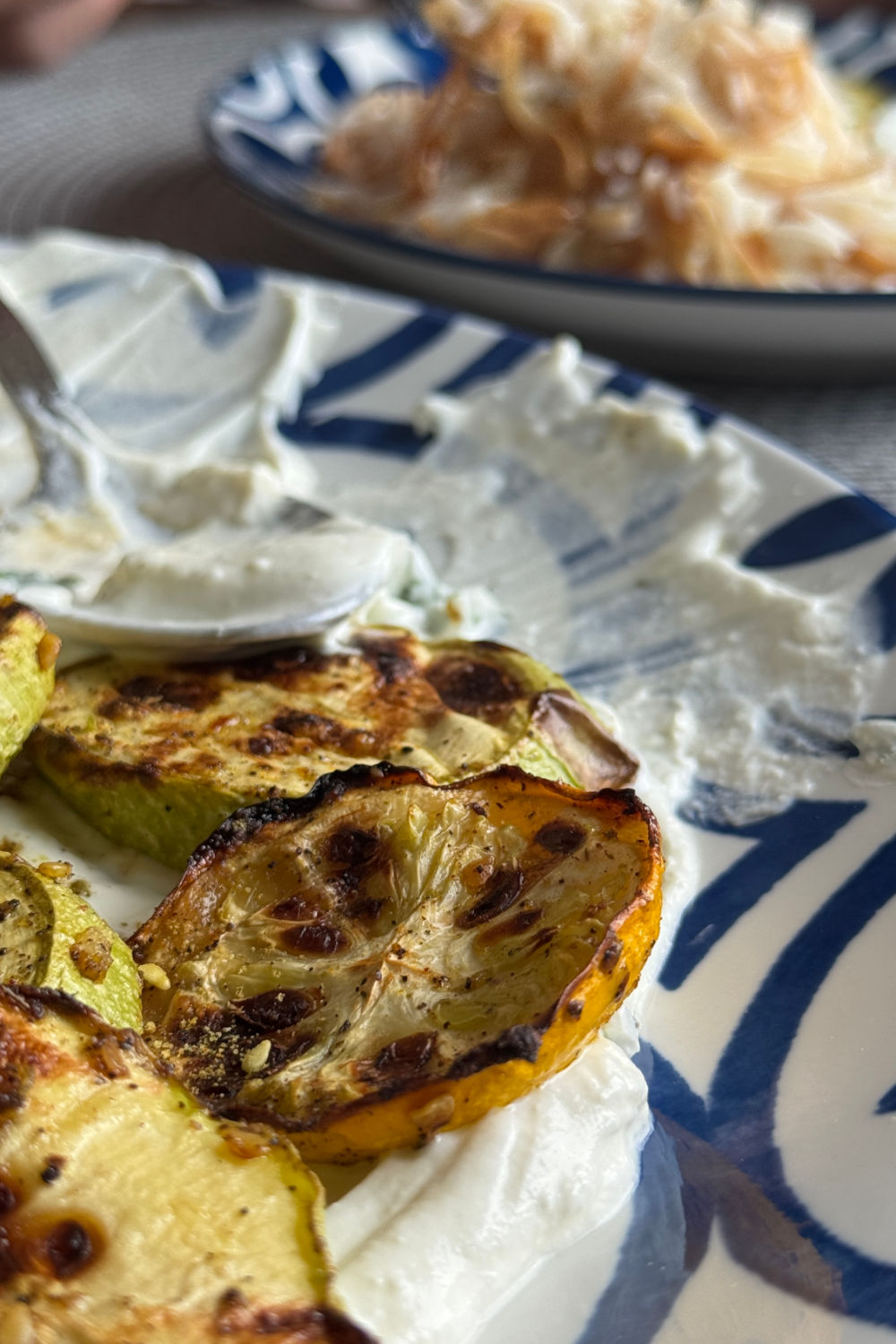
Table of Contents
A Few Things Worth Knowing.
Before you start, a few notes that will make all the difference.
Essential Grocery List and Ingredient Notes

Optional Substitutions and Customization
Special Tools You’ll Need
Estimated Time
Recipe Steps at a Glance
Here is the full arc of this dish before you begin.
Step-by-Step: How to Make Za’atar-Roasted Zucchini
Step 1: Salting the Zucchini


Slice the zucchini into thick planks, about half an inch. If you’re using pattypan squash, halve or quarter the small ones instead. Spread the pieces out on a sheet pan or a large plate and salt them generously, then let them sit for 10 to 15 minutes. You’ll see beads of liquid come to the surface. That’s the zucchini’s water leaving before it gets the chance to steam the vegetable on the pan later.
Step 2: Making the Za’atar Marinade

While the zucchini rests, whisk the olive oil, lemon juice, salt, pepper, most of the garlic, the chili flakes, sumac, and za’atar together in a large bowl. Set aside a spoonful of the minced garlic for the yogurt sauce. You’ll want it later. The marinade should smell herbal and a little tangy from the sumac before the zucchini ever touches it.
Step 3: Coating and Arranging for the Broiler

Pat the zucchini dry with a towel first. This matters more than it sounds like it should, since wet zucchini won’t pick up any color under the broiler. Toss it in the marinade until every piece is coated, then arrange it in a single layer directly on a sheet pan. Use aluminum foil for easy cleanup. Skip the parchment paper here. It traps steam underneath the zucchini, and you’ll end up with soft, pale pieces instead of blistered ones.
Step 4: Broiling Until Blistered, Then Roasting Until Tender
Broil the zucchini for 5 to 7 minutes, watching closely since broilers vary a lot from oven to oven. You’re looking for real char on the edges, dark in spots, not just a light golden color. Once you’ve got that blister, drop the oven down to 400°F (200°C) and roast for another 10 to 15 minutes, until the zucchini is fork-tender all the way through. The two-step heat is what gets you both: char on the outside, no rawness in the middle.
Step 5: The Garlicky Lebneh Sauce
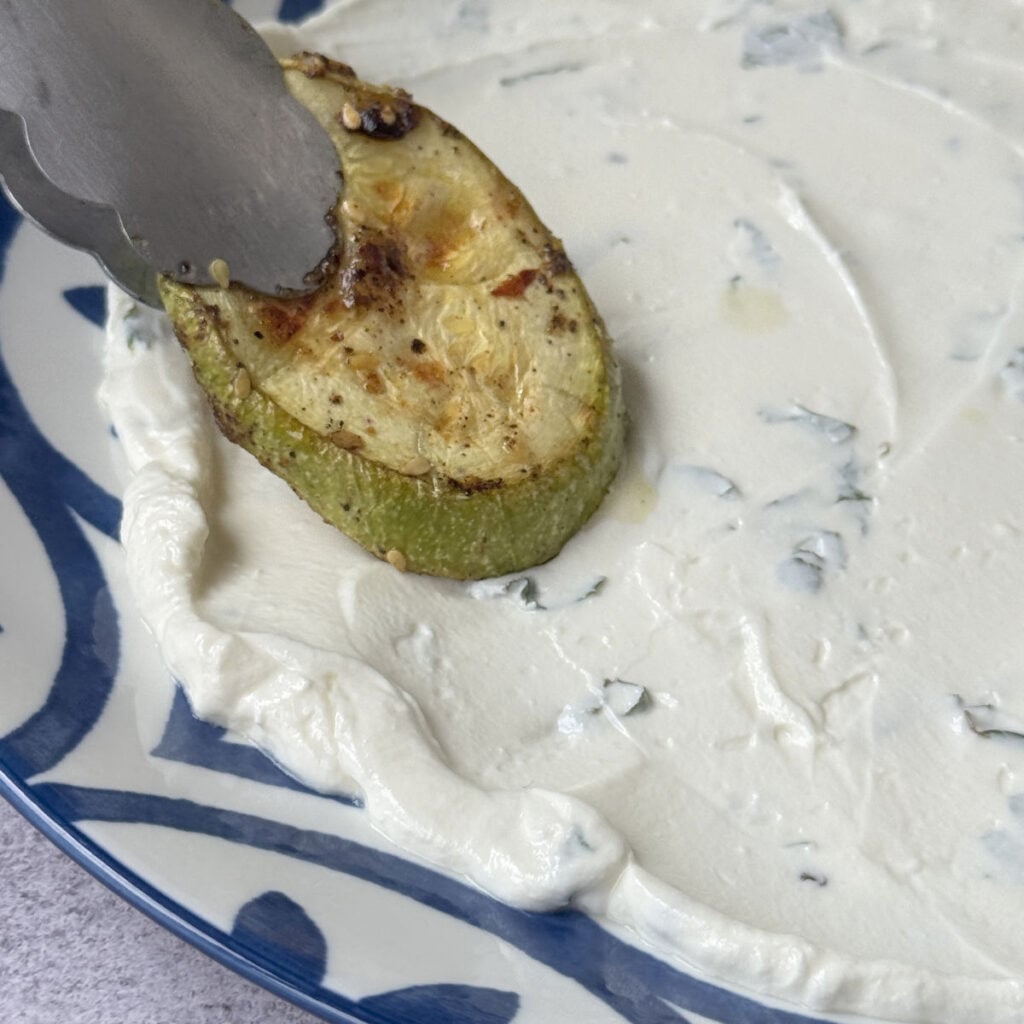
While the zucchini finishes roasting, stir the lebneh or strained yogurt with the reserved garlic, the chopped mint, and salt to taste. Spread it across a serving platter with the back of a spoon, building a wide swoop rather than a flat layer. It should still be cool when the hot zucchini goes on top. That contrast is the whole point.
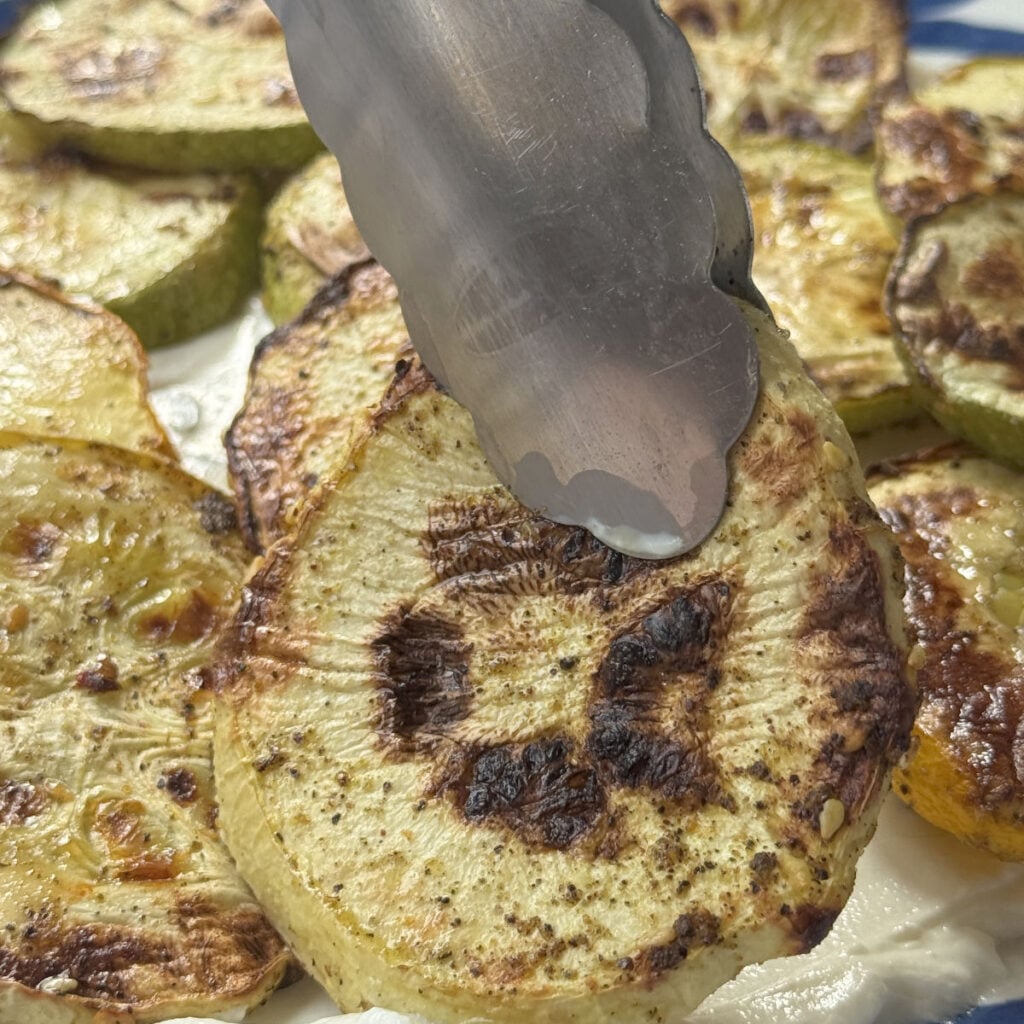
Plate the zucchini straight from the oven over the sauce while it’s still hot, then finish with the reserved parsley, mint, and an extra dusting of za’atar. Serve it while the vegetable is still warm and the sauce is still cool.
It’s just as good at room temperature or cold, so leftovers don’t need reheating.
Tips and Wisdom from Cafe Osharak
Frequently Asked Questions
Can I grill this instead of using the broiler?
Yes. Skip the broiler step and grill the marinated zucchini directly over medium-high heat until it’s charred and tender, about 3 to 4 minutes per side.
Why broil first instead of just roasting the whole time?
The broiler’s high, direct heat is what gives the zucchini real char in just a few minutes. Roasting alone at a lower temperature for the same amount of time won’t blister the edges the same way.
Can I make the lebneh sauce ahead of time?
Yes, and I’d actually recommend it. The sauce keeps in the fridge for up to 2 days, and the garlic flavor only gets better as it sits.
Can I substitute a different summer squash?
Yes. Pattypan squash works well here; just halve or quarter the smaller ones so the pieces cook at roughly the same rate as the zucchini. For this recipe I used a combination of zucchini and pattypan squash. Yellow summer squash is another easy swap.
What is za’atar?
Za’atar is a Middle Eastern spice blend built on dried thyme, sumac, and toasted sesame seeds, though the exact mix varies by region and household. It brings a tangy, herbal flavor that plain thyme or oregano can’t quite match.
Can I use regular yogurt?
Regular yogurt is too liquidy. Some of the juice the zucchini releases will make the sauce even more watery. If time permits, strain the yogurt in a sieve lined with a coffee filter, paper towel, or a double layer of cheesecloth. This way you can remove as much liquid as possible.
More Armenian & Middle Eastern Vegetable Dishes
More Summer Squash and Veggies to Try from Cafe Osharak

Ingredients
Za’atar-Roasted Zucchini
- 2 lbs zucchini or pattypan squash
- 2 tablespoons olive oil
- a few cloves garlic crushed and finely minced, divided
- 2 tablespoons za’atar
- ½ tsp sumac
- pinch chili or red pepper flakes
- 2 tablespoons lemon juice
- salt to taste
- pepper to taste
- 1 tablespoon fresh parsley and mint
Garlicky Lebneh Sauce
- extra za’atar for finishing
- 1 cup lebneh or strained Greek yogurt
- reserved garlic from marinade
- 1 teaspoon mint chopped
- salt to taste
Instructions
- Slice zucchini into thick planks (or halve/quarter pattypan squash). Salt generously and let sit 10–15 minutes to draw out moisture.
- Whisk together olive oil, lemon juice, salt, pepper, most of the garlic, chili flakes, sumac, and za’atar in a large bowl. Set aside a spoonful of garlic for the sauce.
- Pat zucchini dry, toss in the marinade to coat, then arrange in a single layer on a bare sheet or broiler pan.
- Broil 5–7 minutes until blistered and charred, then drop the oven to 400°F (200°C) and roast 10–15 minutes more until fork-tender.
- Stir lebneh or strained yogurt with the reserved garlic, chopped mint, and salt to taste. Spread onto a serving platter.
- Plate the hot zucchini over the sauce. Finish with reserved parsley, mint, and extra za’atar.