European Cakes & Desserts


The Osharak Guide to Classic Baking from Across Europe
Cakes Worth Making from Scratch
There’s something genuinely satisfying about slicing a cake that took two days to make. Not the relief of finishing a project, but something quieter – the moment the layers you couldn’t quite see while building them finally show themselves. You cut through, and there it is: everything you hoped it would look like. My mother-in-law would always say, “Noune, it’s a big job, I don’t want to spend all day on that cake. We can always order it.” But I didn’t mind. I love doing that.
I grew up eating cakes like these. My mom always baked, and she created cakes that people still talk about. Some were family treasures passed down from her mother. Some came from cookbooks she’d study like they were novels. And some were pure invention – whatever she imagined that day, whatever ingredients were on hand. Whether the recipe came from Budapest, Paris, or the kitchens of Eastern Europe, these cakes carry that weight of occasion. They’re not casual. They’re made with care, for people you love, on days worth remembering.
At Cafe Osharak, I have spent years learning these recipes in my own kitchen – sometimes with my mom baking the same cake on the other side of the world, each of us comparing notes across time zones. This guide brings together everything I have made, tested, and fallen in love with: celebration tortes, French tarts, Italian confections, Eastern European sweets, and the foundational creams and techniques that make them all possible.

Celebration Cakes & Tortes
Esterházy Torte & Dobos Torte – Hungary’s Finest

The great tortes of Central Europe were perfected in the coffeehouses of Vienna and Budapest, where pastry chefs competed to create something so technically demanding that the reputation of an entire city could rest on it. What was once the prerogative of grand bakeries and professional pastry kitchens has quietly found its way into the home baker’s repertoire. And that’s exactly where it belongs.
My mom and I made both of these cakes together – each in our own kitchens, she in Armenia, I halfway across the world in Colorado. And the results were entirely different. That’s the nature of these tortes: they reward your own hands, your own oven, your own patience.
- Esterházy Torte – hazelnut dacquoise, iconic web glaze, Hungary’s most elegant export
- Dobos Torte – seven sponge layers, chocolate buttercream, and a shattered caramel crown
European Layered Cakes

Beyond Hungary, Central and Eastern Europe has its own canon of celebration cakes. Germany’s Black Forest Gateau, the airy Soviet-European Bird’s Milk Cake, and the walnut-rich Smetannik all share the same spirit: a cake made for a table of people, on a day that matters.
- Black Forest Gateau – Germany’s beloved cherry and cream classic, built properly with kirsch and fresh cream
- Bird’s Milk Cake – a Soviet-European soufflé cake that looks simple and tastes like nothing else
- Smetannik – a family-favourite sour cream walnut cake rooted in Eastern European tradition
French & Italian Pastry Cakes
French Pastry Cakes
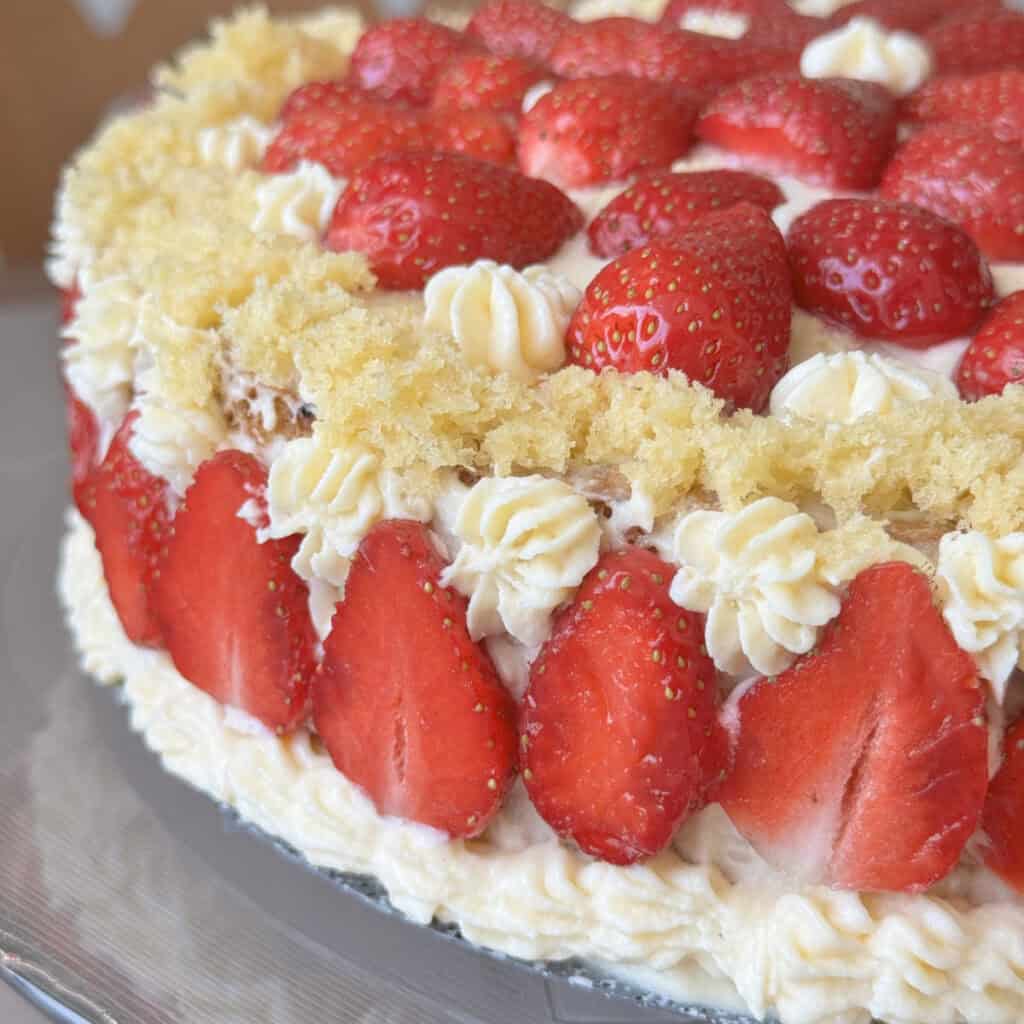
French pâtisserie is architecture – precise, measured, built to look as perfect as it tastes. These are recipes that reward planning and patience. Make the mousseline cream the day before. Let the assembled cake rest overnight. The results speak for themselves.
- Le Fraisier – the French strawberry cake that looks like a jewel box, built around mousseline cream
- Tiramisu Bûche de Noël – a holiday showstopper fusing the Italian coffeehouse with the French Christmas table
Italian Pastry & Dolci

Italian baking is more generous, more forgiving – more likely to show a fingerprint or a crack and call it character. The Zuccotto is a perfect example: rustic on the outside, architectural within. And the Pecshe Dolci, those peach-shaped cookies tinted blush and filled with cream, are proof that Italian confectionery has a sense of theatre all its own.
- Strawberry Zuccotto Fiorentino – a Florentine dome cake built around mousseline cream and summer strawberries
- Pecshe Dolci – Italian peach-shaped cookies filled with cream, dipped and tinted to look exactly like the fruit
Tarts, Pies & Pastry
Frangipane Tarts

A well-made tart shell is one of the most satisfying things you can produce in a home kitchen – pale gold, crisp at the edge, yielding where it meets the filling. Frangipane, that almond cream filling you will find in both tarts below, is one of the most versatile techniques to learn. Once you have it down, a dozen other tarts open up. Cherries, pears, apricots, plums: whatever the season brings, frangipane will hold it beautifully.
- Cherry Frangipane Tart – fresh summer cherries on a buttery almond cream base, in a crisp shortcrust shell
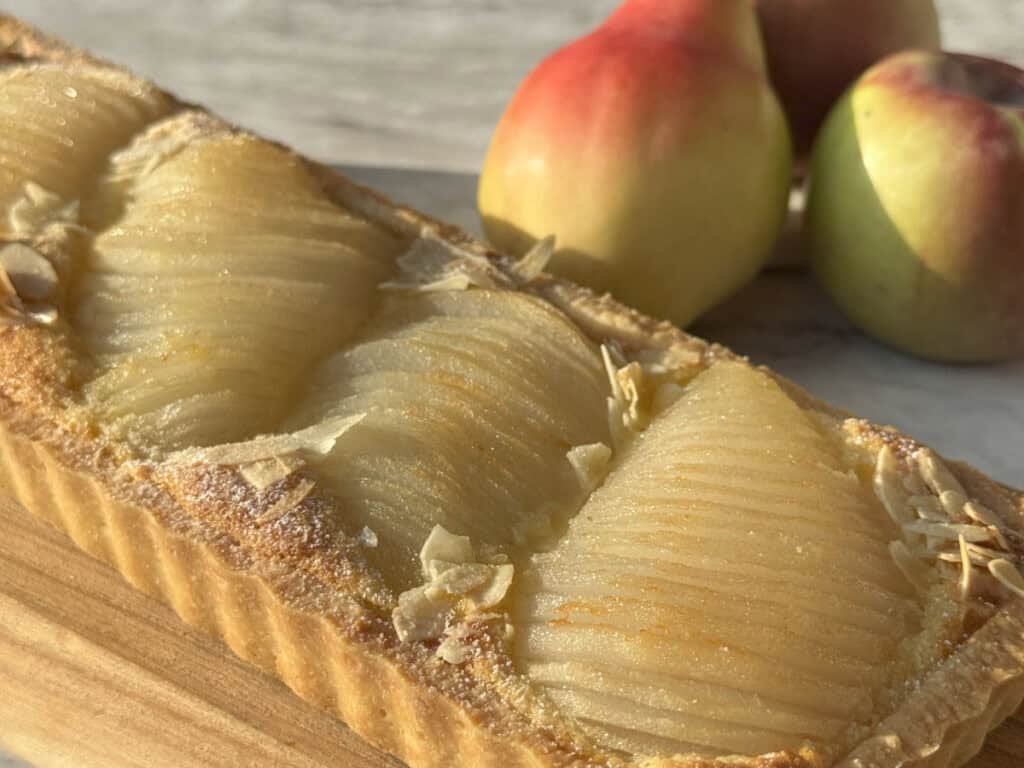
- Tarte Bourdaloue – the classic Parisian pear and frangipane tart, named for the street where it was first sold
Confections, Cookies & Sweet Bites
Armenian & Eastern European Confections
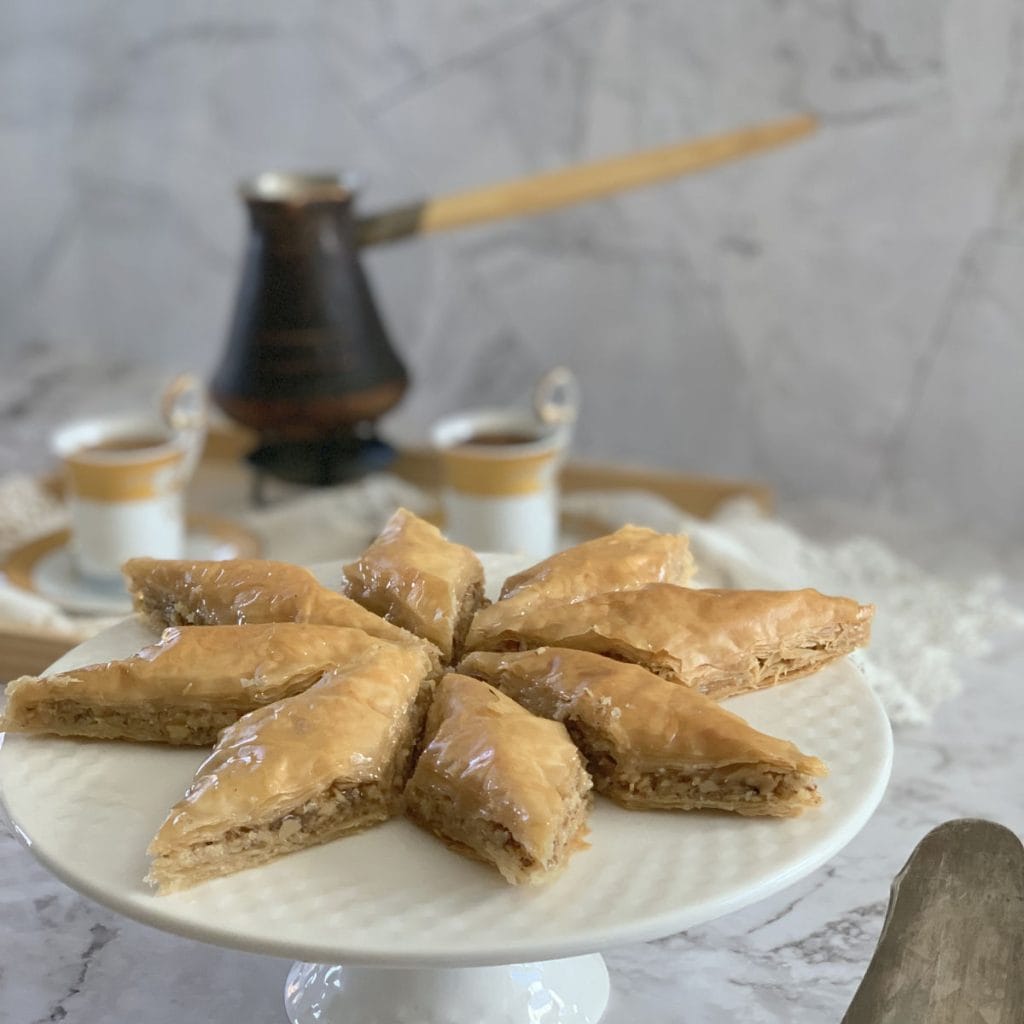
Some of the most memorable sweets in this collection are smaller than a slice of cake. A walnut-filled pastry eaten in one bite. A cookie shaped and coloured to look exactly like a peach. A string of walnuts dipped in thickened grape juice, carried as a traveller’s sweet across centuries. These confections connect the Armenian table to the European pastry shelf – food that does not respect borders, and neither does this collection.
- Armenian Pakhlava – sweet walnut layers soaked in honey syrup, rooted in Silk Road tradition. Also featured in the Armenian Cuisine guide
- Sharan – Armenian Sweet Sujukh – walnut-string candy made by dipping walnuts in thickened grape juice
- Armenian Gata – flaky, buttery pastry from the Armenian highlands, served at Easter and on any morning that deserves it. Also featured in the Armenian Cuisine guide
French & Italian Cookies

The French tuile and the Italian Popoques share a quality that few baked things have: they are as much about technique as they are about eating. Shaped while warm, made to be admired before they are consumed. The Pecshe Dolci carry this further – assembled, dipped, and coloured until they look nothing like a cookie and everything like a piece of fruit.
- Tuile Cookie Leaves – delicate French wafers shaped while still warm from the oven, decoration and dessert in one
- Popoques – Walnut Waffle Cookies – crisp, walnut-laced, and entirely addictive, made in a waffle iron
- Pecshe Dolci – Italian peach cookies filled with pastry cream, dipped and tinted blush to look exactly like the fruit
Components & Skills: The Building Blocks
Creams & Fillings

Every recipe in this guide is made of smaller pieces. The mousseline cream inside Le Fraisier. The lemon curd that fills a tart shell. The choux pastry that becomes cream puffs today and éclairs tomorrow. Learning these components separately – understanding what they are, why they behave as they do, and where they might go wrong – makes every recipe above more achievable.
- Velvety Mousseline Cream – the silk lining inside Le Fraisier and the Zuccotto. Richer than pastry cream, lighter than buttercream. Used in: Le Fraisier, Strawberry Zuccotto
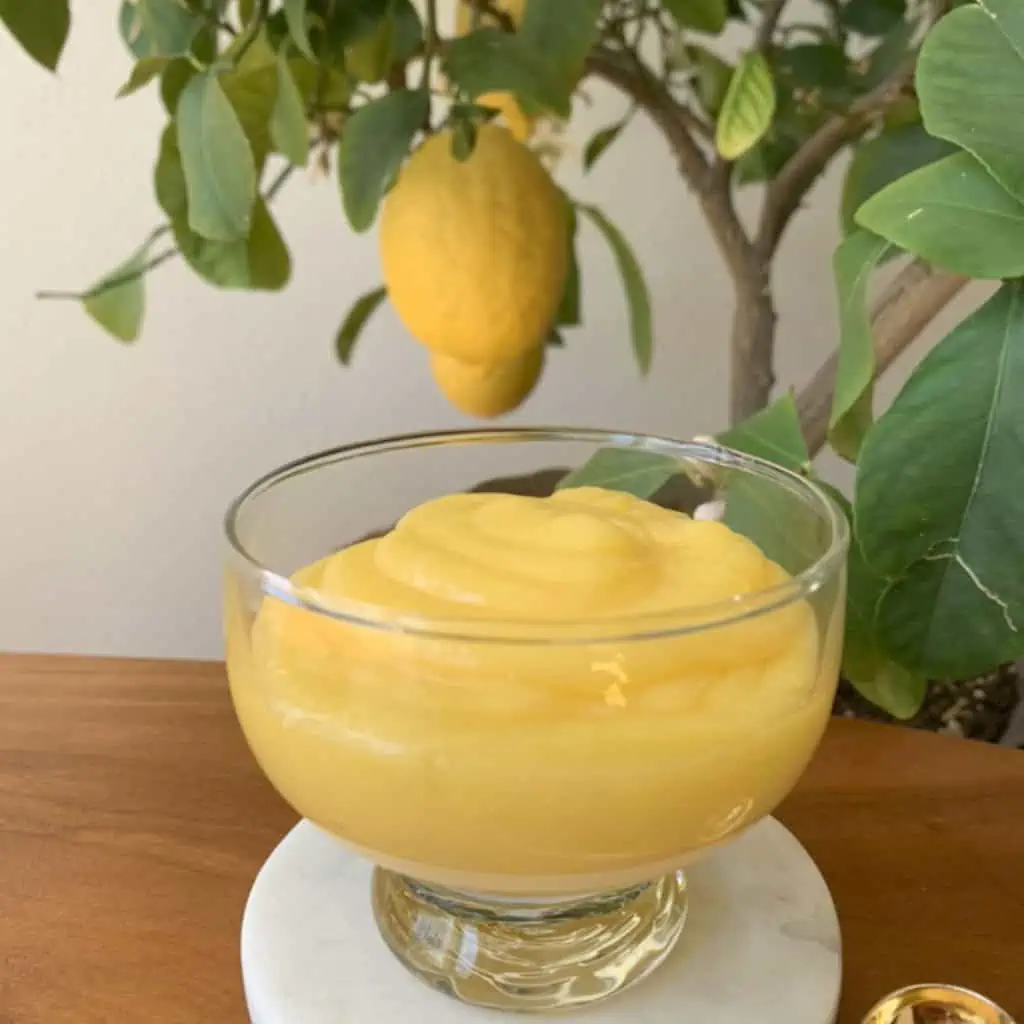
- Homemade Lemon Curd – bright and tangy, ready to fill a tart shell, layer into a cake, or eat by the spoon
Pastry Techniques
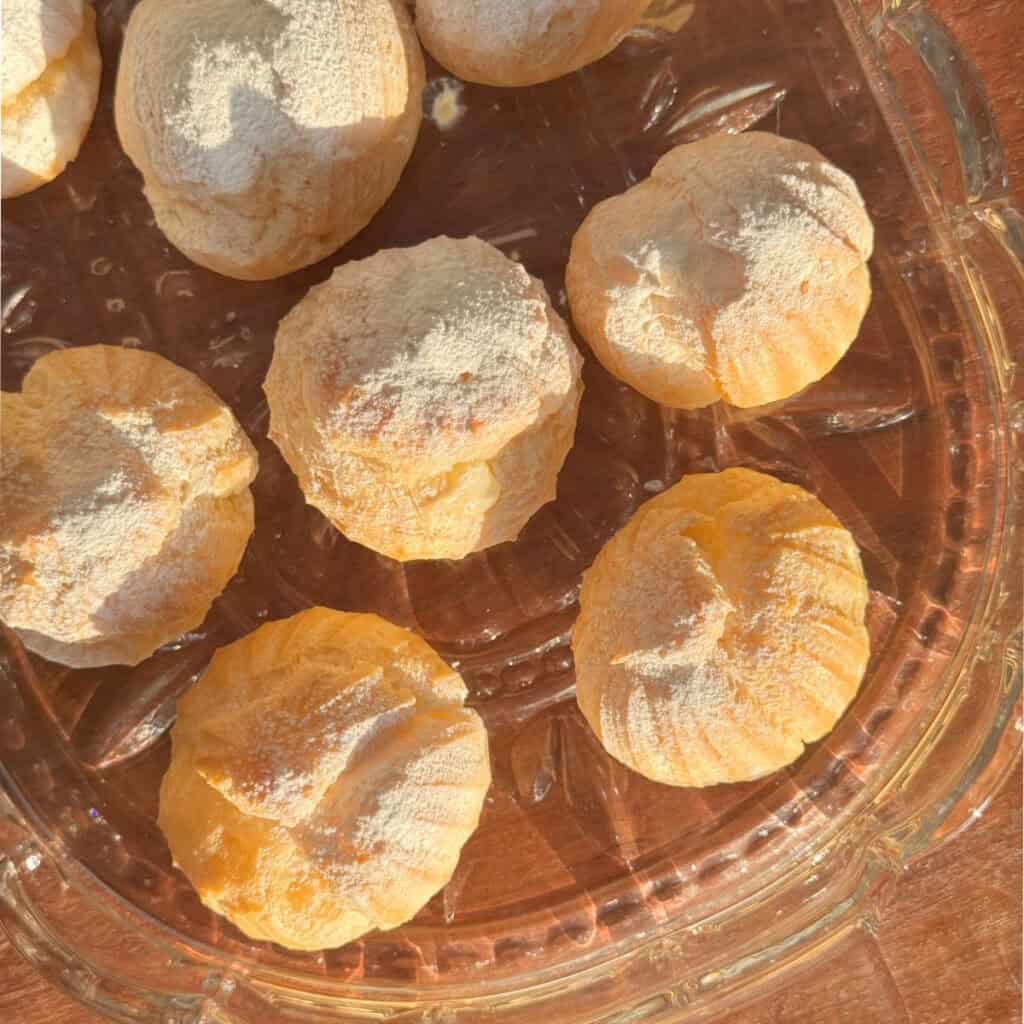
Master choux pastry and a dozen desserts open up. This guide walks through every step and every thing that can go wrong — so you are fully prepared before the oven goes on.
- Easy Cream Puffs – Choux Pastry Guide — master choux and profiteroles, éclairs, and Paris-Brest all follow
Where to Begin
If you are new here, start with whatever sounds most like the occasion you are baking for. A birthday calls for a torte. A Sunday afternoon in early spring calls for a frangipane tart. A weeknight when you want something beautiful but not elaborate calls for cream puffs or a plate of Popoques.
If you have been here before, the Components & Skills section might hold something new — a technique you have been curious about, or a component that unlocks a recipe you have been putting off.
New recipes are added throughout the year, following the seasons and whatever has been occupying my kitchen.
Browse the full recipe index.