
Muhammara Recipe (Roasted Red Pepper Walnut Dip)


This post may contain affiliate links. As an Amazon Associate, I earn from qualifying purchases. See my Affiliate Disclosure .
Muhammara is one of those dips that draws people in before anyone takes a bite. The color alone, a bold and earthy red, feels like an invitation to the table. The name comes from the Arabic word for “reddened,” and this dip earns it: roasted red peppers, toasted walnuts, olive oil, and pomegranate molasses, blended into something spicy, tangy, and slightly sweet.
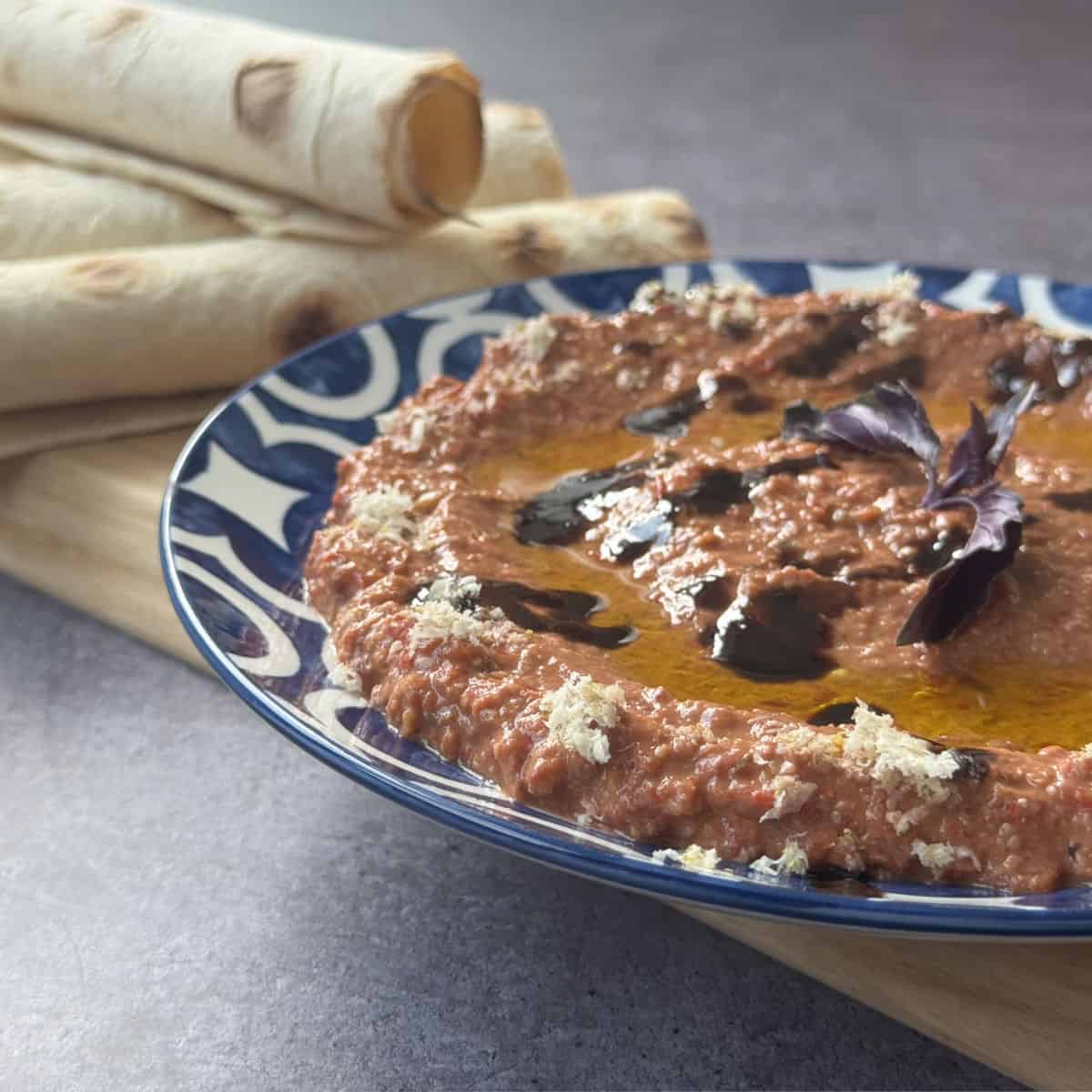
I always serve it when people gather. It feels rustic and luxurious at the same time, and it disappears faster than anything else on the mezze table. If you have a food processor and half an hour, you can have it resting in the fridge tonight, deepening in flavor for tomorrow’s table.
Menu Suggestion: Make It a Meal
Build a full mezze table around this muhammara and let everyone graze their way through the evening.
Table of Contents
Chronicle of Muhammara
Muhammara takes its name from the Arabic word ahmar, meaning red, so the dish is literally “the reddened one.” It was born in Aleppo, a city whose kitchens shaped much of the Levant. For Armenians, that connection runs deep: Aleppo was home to a large Armenian community for generations, and dishes like muhammara moved into Western Armenian kitchens and stayed, becoming part of the mezze language spoken at our tables.
My mom used to can roasted red peppers every summer as a base for muhammara. She waited for firm, meaty peppers at their peak, then roasted, peeled, and cored them, and ground them into a coarse paste. Tomatoes went in for acidity, enough to keep the jars shelf stable through the cold months. Come winter, a few of those jars meant a quick starter was never far away, the taste of summer peppers in the middle of a winter dinner table.

These days I carry on the tradition, with one shortcut of my own: I freeze the pepper paste in ice cube trays, so a handful of cubes is all it takes to start a batch any time of year.
A Few Things Worth Knowing
Before you start, a few notes that will make all the difference.

Essential Grocery List and Ingredient Notes

Optional Substitutions and Customization
Special Tools You’ll Need
Estimated Time
Recipe Steps at a Glance
Here is the full arc of this dish before you begin.
Step-by-Step: How to Make Muhammara
Step 1: Roast and Peel the Peppers


Wash the bell peppers and roast them whole until the skins blister and char: in a hot oven, on the grill, or right on the stovetop in a cast iron pan, turning as each side blackens. The char is where the smoky flavor lives, so don’t be timid; you want blackened patches, not just softened skin. Once charred all over, let the peppers rest a few minutes (a covered bowl makes the skins release easily), then peel away the charred skin, cut each pepper in half, and remove the seeds and stems.
Step 2: Toast the Bread and Walnuts

Spread the bread slices and walnuts on a sheet pan and toast in a 350°F (180°C) oven for about 10 minutes, until the bread is dry and golden and the walnuts smell warm and nutty. This one pan does double duty: the toasted bread will thicken the dip without gumminess, and the toasted walnuts taste noticeably deeper than raw ones.
Step 3: Pulse the Base

Break the toasted bread into pieces and pulse it with the walnuts in the food processor until you have a coarse paste. Stop before it turns to powder; those small rough bits are what give muhammara its pleasantly rustic texture.
Step 4: Add the Peppers and Blend

Add the roasted peppers and the garlic to the food processor and pulse until everything comes together into a thick, vivid red mixture. The peppers carry a lot of moisture, so the paste will loosen as they break down.
Step 5: Season and Adjust
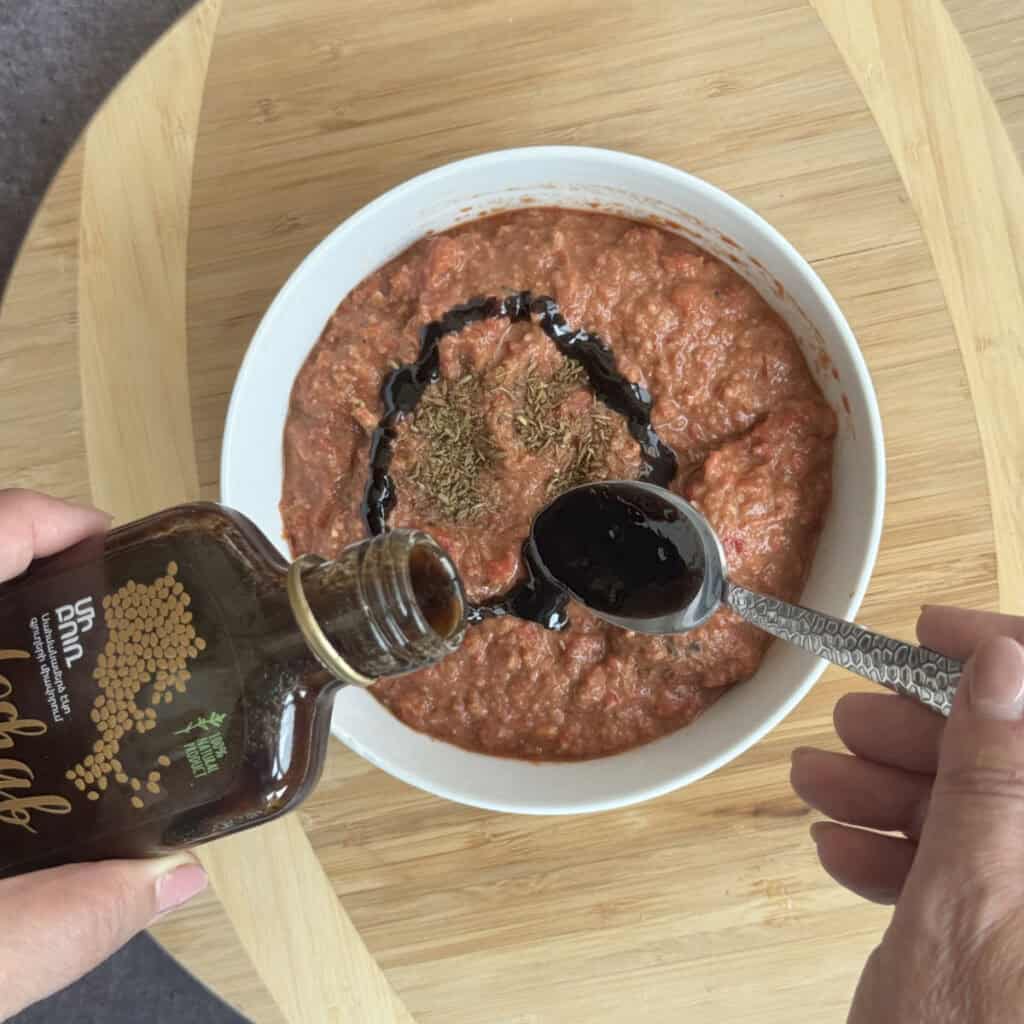
Add the salt, Aleppo pepper, paprika, cumin, and pomegranate molasses, then drizzle in the olive oil while pulsing until you reach the consistency you like: smooth and spoonable or thick and rustic. Taste, and adjust. A little more molasses if it needs brightness, more salt if it tastes flat, a spoonful of breadcrumbs if it feels too loose.
Step 6: Rest, Garnish, and Serve

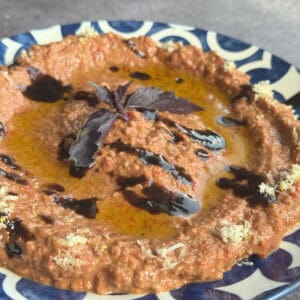
Transfer the dip to a container, cover, and refrigerate for 24 hours before serving. This rest is where muhammara becomes itself; the peppers, molasses, and spices settle into each other and the flavor deepens remarkably. To serve, spread it into a shallow bowl, swoosh the surface with the back of a spoon, drizzle with olive oil and pomegranate molasses, and scatter pomegranate seeds over the top.
Tips and Wisdom from Cafe Osharak
Frequently Asked Questions
What is muhammara made of?
Muhammara is a Levantine dip made from roasted red peppers, toasted walnuts, bread or breadcrumbs, pomegranate molasses, olive oil, and warm spices like cumin and paprika. It originated in Aleppo, Syria, and is a staple of Armenian and Levantine mezze tables.
Can I make muhammara ahead of time?
Yes, and you should. This recipe rests in the fridge for 24 hours before serving so the flavors can develop. It keeps in an airtight container for up to 5 days, and the flavor keeps deepening for the first day or two.
What can I substitute for pomegranate molasses?
There is no perfect substitute, but a mix of lemon juice with a little honey comes closest to its sweet-sour character. If you cook Mediterranean food often, a bottle of pomegranate molasses is worth keeping in the pantry; it lasts a long time.
Is muhammara supposed to be spicy?
Traditionally it carries a gentle, warm heat rather than a fiery one. This recipe uses Aleppo pepper, which is mild and fruity, so the dip stays approachable. Add a spoonful of red pepper paste if your table likes it bolder.
Can I freeze muhammara?
Yes, it freezes well. Store it in small portions, thaw overnight in the fridge, and stir in a fresh drizzle of olive oil before serving to bring back its glossy texture.
More from the Armenian & Middle Eastern Meze Table
These dishes sit beautifully beside a bowl of muhammara, whether for a weekend brunch or an evening of entertaining.
If this muhammara sparked your appetite for the mezze table, here are a few more recipes from Cafe Osharak that share its spirit.
More Recipes to Try from Cafe Osharak
Muhammara Recipe
Ingredients
- 4 medium red bell peppers fresh, roasted
- 1 hot chili pepper optional
- 1/2 cup walnuts
- 3 – 5 slice bread crusty or 1/2 cup breadcrumbs
- 3 tablespoons pomegranate molasses
- 1/4 cup olive oil plus more for serving
- 1 teaspoon Aleppo pepper
- 1 teaspoon paprika
- 1 garlic clove finely minced
- 1/2 teaspoon ground cumin
- 1/4 teaspoon salt or to taste
Instructions
Roast the peppers
- Wash the bell peppers and roast them whole until the skins blister and char, in the oven, on the grill, or on the stovetop in a cast iron pan, turning as each side blackens.
- Let the peppers rest a few minutes, then peel off the charred skin, cut each pepper in half, and remove the seeds and stems.
Toast the bread and walnuts
- Spread the bread slices and walnuts on a sheet pan and toast in a 350°F (180°C) oven for 10 minutes, until the bread is dry and golden and the walnuts are fragrant.
Blend the dip
- Break the toasted bread into pieces and pulse it with the walnuts in a food processor until they form a coarse paste.
- Add the roasted peppers, the garlic, and the hot chili (if using) and pulse until combined.
- Add the salt, Aleppo pepper, paprika, cumin, and pomegranate molasses. Drizzle in the olive oil while pulsing until you reach your desired consistency, smooth or rustic.
- Taste and adjust the seasoning: more molasses for brightness, salt for depth, or a spoonful of breadcrumbs if the dip is too loose.
Rest and serve
- Transfer to a container, cover, and refrigerate for 24 hours before serving to allow the flavors to develop.
- To serve, spread into a shallow bowl, drizzle with olive oil and pomegranate molasses, and scatter pomegranate seeds over the top.