
Lenten Armenian Tolma – Legumes, Fresh Herbs, Grape Leaves


This post may contain affiliate links. As an Amazon Associate, I earn from qualifying purchases. See my Affiliate Disclosure .
Armenian Lenten tolma is one of the oldest expressions of plant-based cooking in the Armenian kitchen. Made with three kinds of legumes (plump chickpeas, earthy lentils, and tender kidney beans), along with bulgur wheat, sweet caramelized onions, fragrant fresh herbs, and a bright pop of cranberries, these tolmas are fully plant-based yet completely filling.
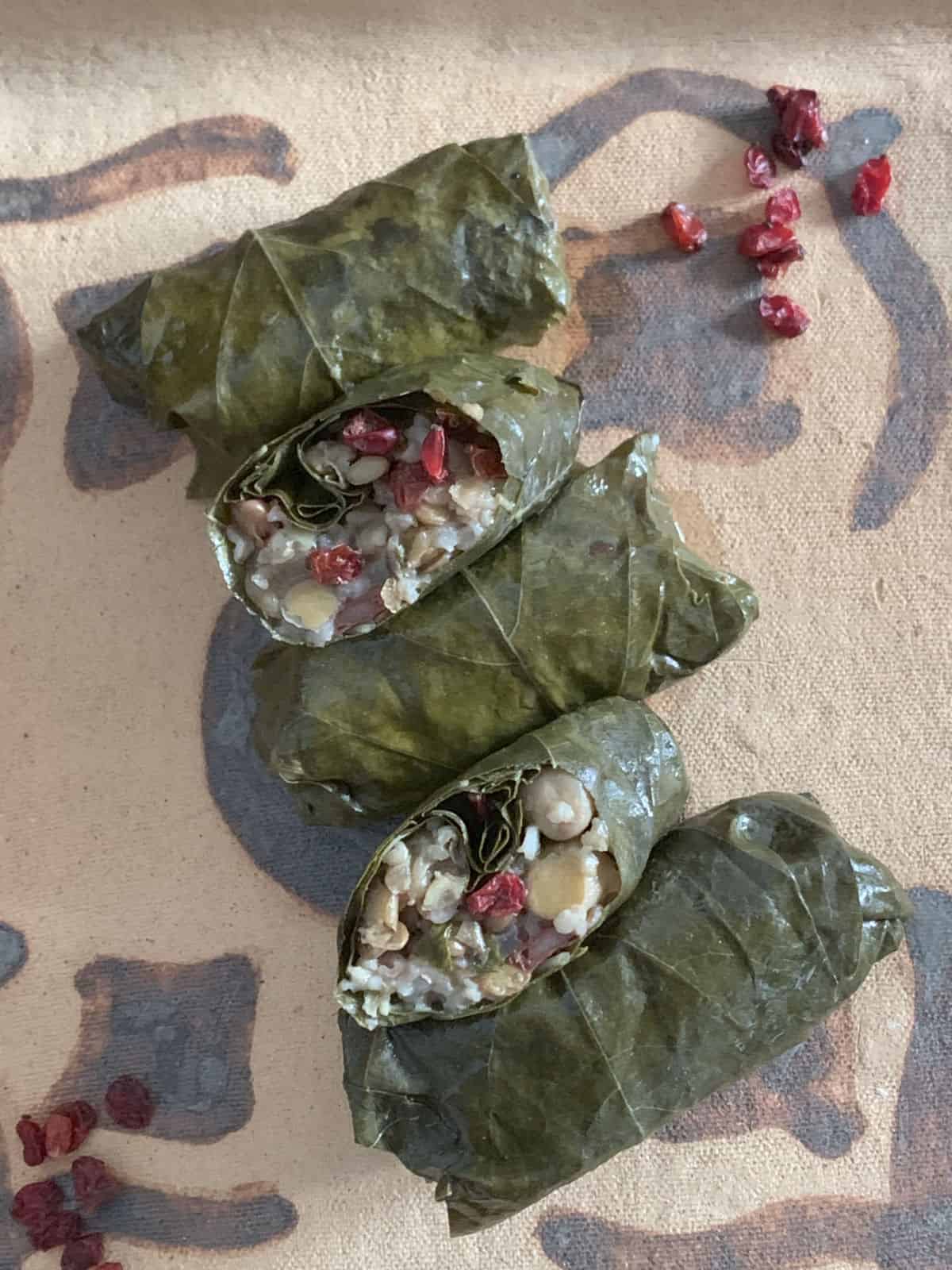
Armenian tolma takes many forms across the seasons. During Lent, when the table is entirely plant-based, this legume version is the one that appears. The filling is built from three cooked legumes bound with bulgur wheat, enriched with deeply caramelized onion, and brightened with parsley, cilantro, and dried barberries. Each legume brings something different to the texture: the chickpeas hold their shape and give resistance, the lentils melt slightly into the mix, and the kidney beans add a creamy softness that holds everything together. Rolled into grape leaves and cooked low and slow, they come out firm, fragrant, and full of flavor that only deepens overnight. For another Lenten grape leaf tolma, the Vegetarian Tolma with Rice and Herbs takes the same wrapper in a lighter, more herbaceous direction.
Menu Suggestion: Make It a Meal
These legume tolmas are wonderful on their own, but they shine brightest when surrounded by other seasonal, plant-based Armenian dishes. Here is how I love to build a complete Lenten spread around them:
Table of Contents
Chronicles of Lent
Lenten tolma is one of the most cherished dishes of traditional Armenian cuisine, particularly during New Year and Armenian Christmas celebrations. Historically, Armenian holidays were ushered in with a week of fasting, during which the consumption of animal products was abstained from.
Notably, the Great Lent (preceding Easter), represented a longer period of fasting. Although shorter fasting periods are less commonly observed today, the Great Lent remains a prominent tradition. The food prepared and shared during these days continues to hold strong significance in Armenian culture. This particular tolma, entirely plant-based, showcases a delightful combination of legumes and herbs, neatly wrapped in grape leaves.

I want to tell you a story of a special doll known as Grandfather Pas or Aklatiz. Among the folk traditions of Armenia, he looked like a small old man, dressed in men’s clothes, with a full mustache and a long beard. Though he was only a doll, he held an important place during Great Lent.
Grandfather Pas was fixed onto an onion that held seven feathers. His little arms stretched out like wings, and from them small stones were hung. The first day of Lent he was lifted and tied to the ceiling, where he gently swayed above the room. From this place, he seemed to watch over the household, making sure everyone kept the rules of Great Lent.
The seven feathers marked the seven weeks of Lent. At the end of each week, one feather was carefully removed. Children sang simple songs as each feather was taken away, wishing bounty in the coming year.
In different regions, this old man doll had different names, but his meaning was the same. He reminded families to stay patient, faithful, and mindful during Lent.
Today, Grandfather Pas feels a little awkward in modern homes. You will mostly find him in ethnography museums rather than hanging from kitchen ceilings. Yet he remains a piece of deep tradition, rustic, ancient, and once rooted in everyday life across historic Armenia, from east to west and from south to north.
Why You’ll Love This Recipe
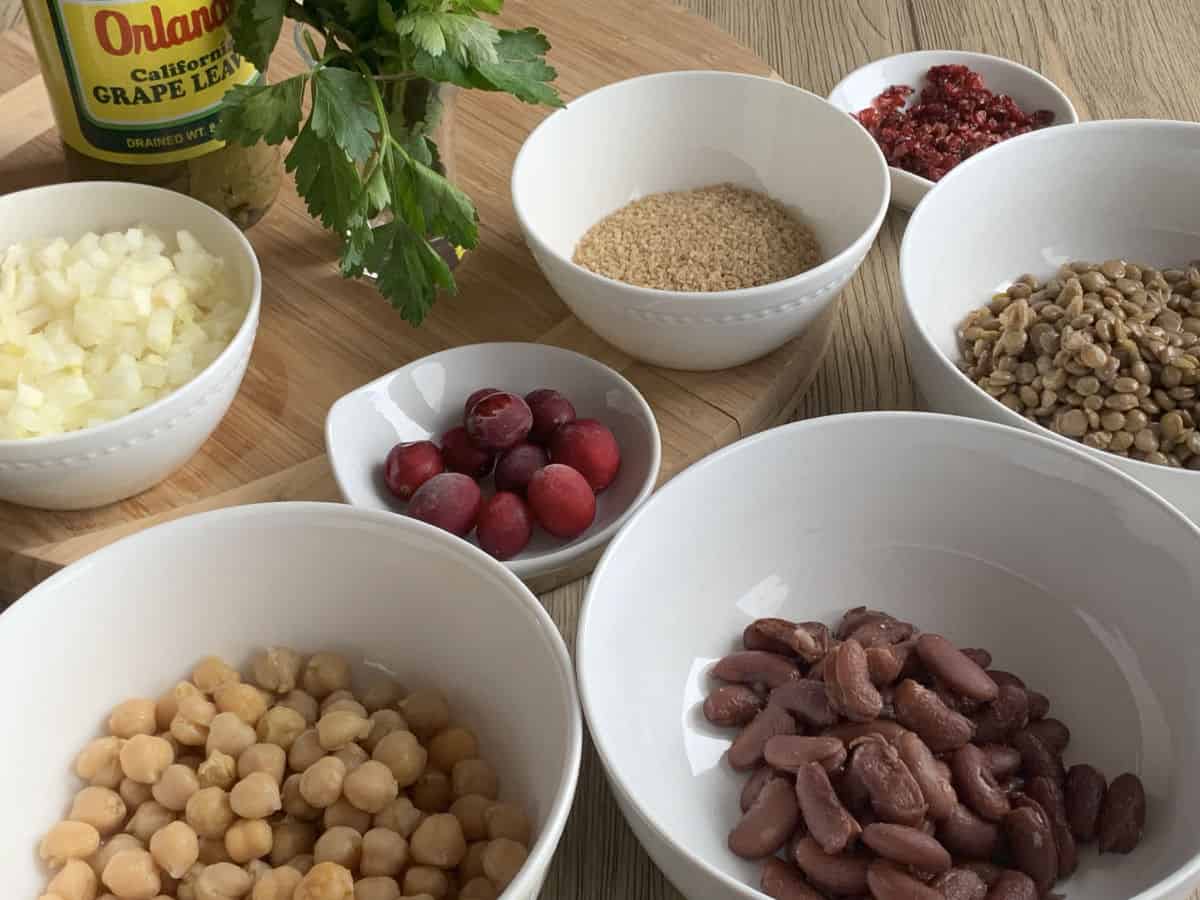
Essential Grocery List and Ingredient Notes
Optional Substitutions and Customization
Special tools you’ll need
Estimated Time
Recipe Steps at a Glance
How to Make Armenian Lenten Grape Leaf Tolma with Legumes
Step 1: Prepare the Grape Leaves
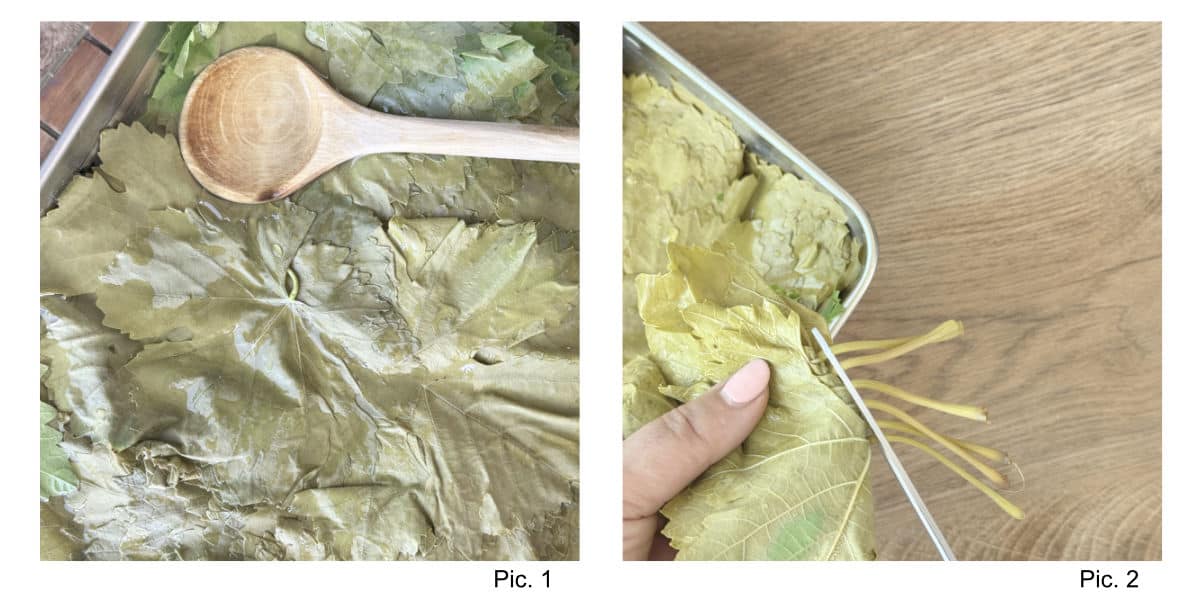
Pull the grape leaves from the jar and place them in a large bowl. Pour hot water over them and let them soak for 5 minutes. This rinses away the metallic brine flavor and removes excess salt. Gently separate the leaves and lay them flat on your work surface. Trim any stems that are longer than 1/4 inch (about 5–6 mm), cutting flush with the leaf base. Sort the leaves loosely by size. You’ll use smaller or torn ones to line the pot.
Step 2: Making the Legume Filling for Tolma
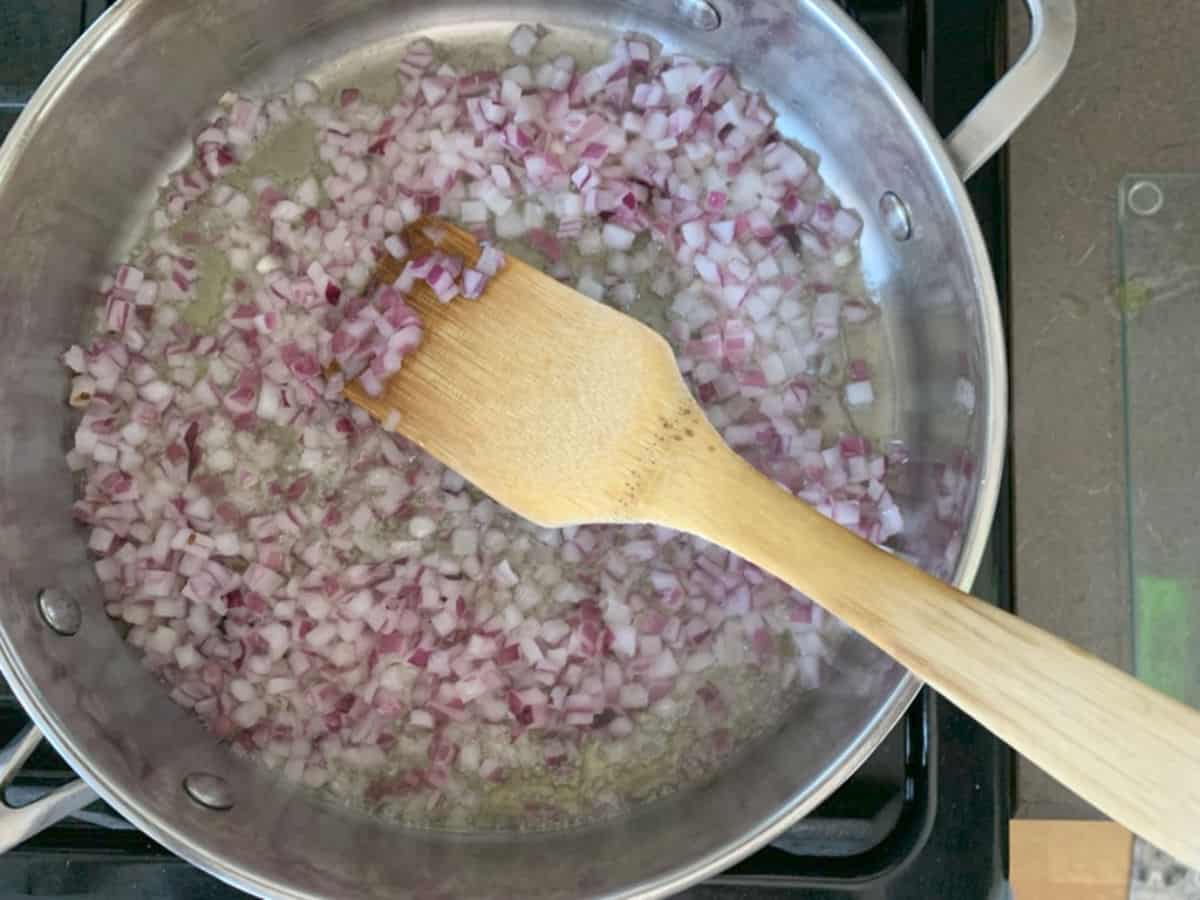
Heat 3–4 tablespoons of olive oil in a frying pan over medium heat. Add the finely diced onion and cook, stirring occasionally, for 8–10 minutes. The onion will begin by sizzling briskly, then gradually turn translucent, and finally settle into a deep golden, jammy caramel (Pic. 3).
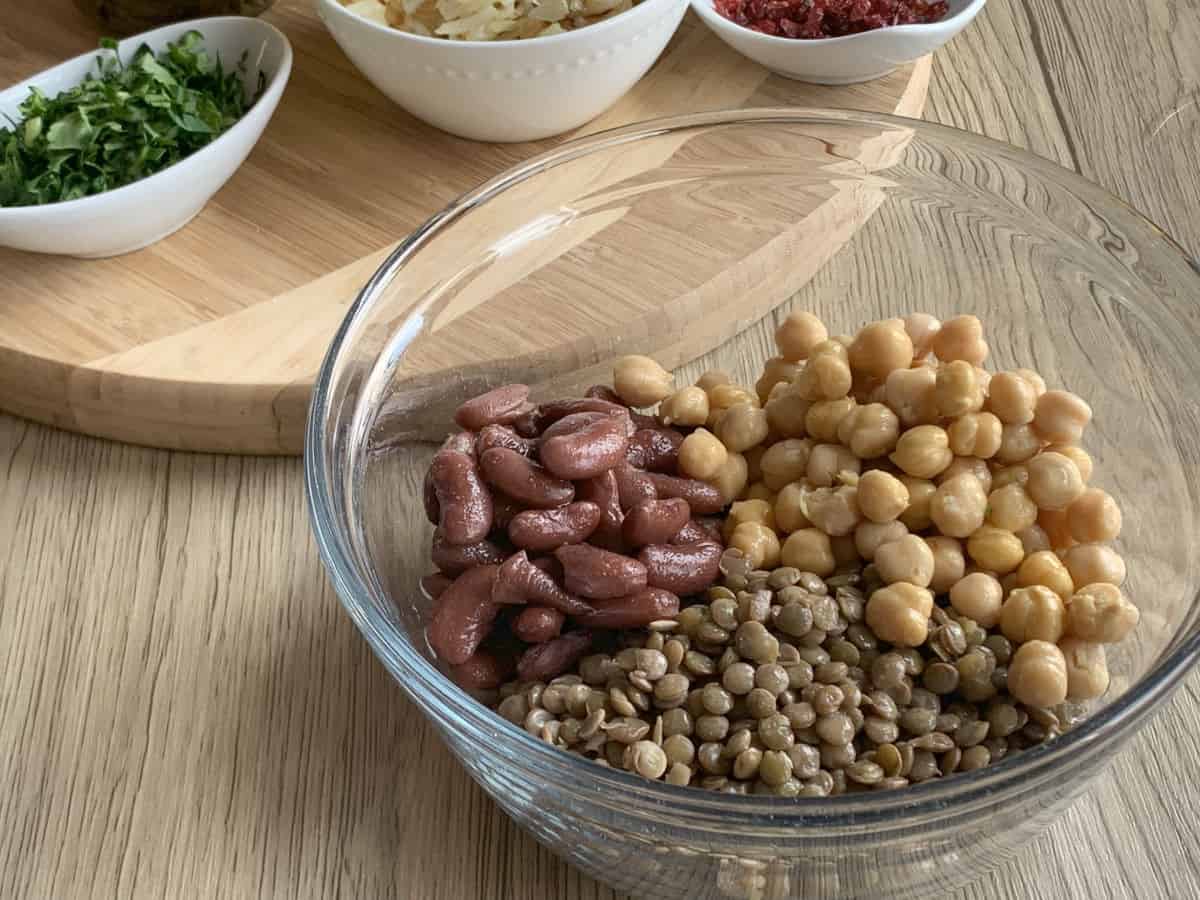
In a large mixing bowl, combine your three cooked and drained legumes: chickpeas, lentils, and kidney beans (Pic.4).
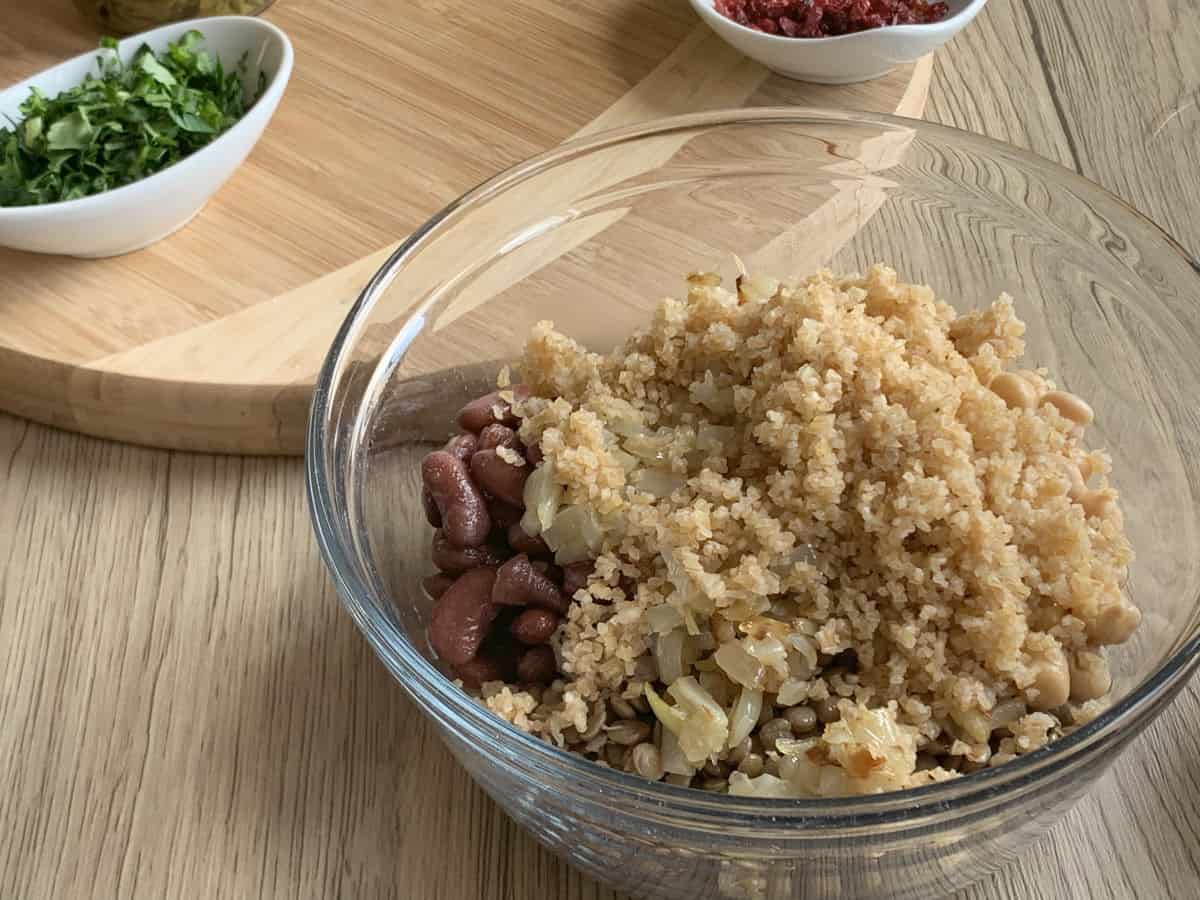
Add the washed and drained bulgur wheat. Toss gently to mix them evenly (Pic.5). The bulgur does not need pre-cooking; it will hydrate and soften as it absorbs moisture from the onion and from the steam inside the pot as the tolmas cook.
Pour the caramelized onion along with all the cooking oil directly over the legume and bulgur mixture and toss well to coat everything evenly.
FAQ: Can I use canned legumes?
Absolutely. Canned chickpeas and kidney beans work beautifully here. Simply drain and rinse them thoroughly before using. For the lentils, I prefer to cook them from dried for the best texture. They take only 20–25 minutes and hold their shape much better than canned lentils, which can be quite soft.
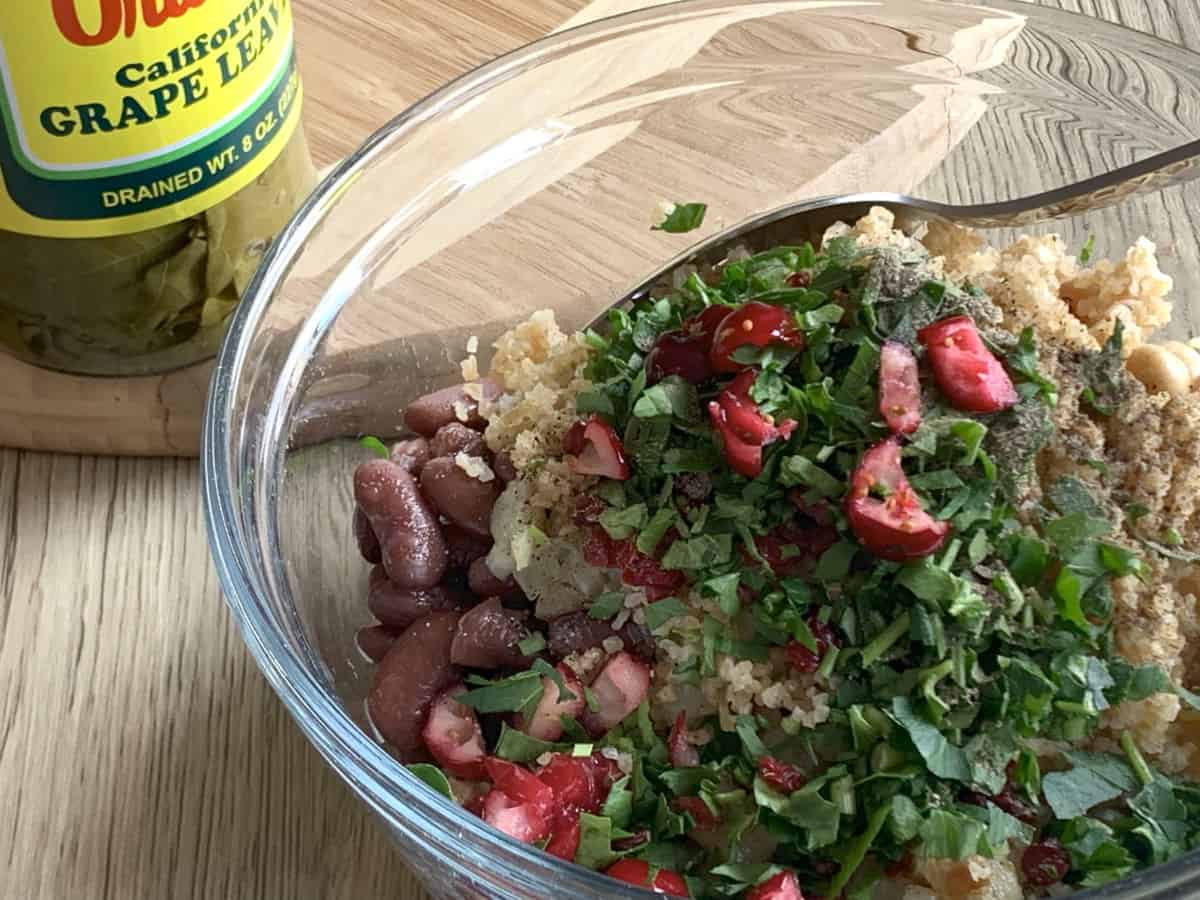
Add the chopped fresh parsley and cilantro to the legume mixture, then scatter in the dried cranberries. Season with salt and freshly ground black pepper (Pic. 6).
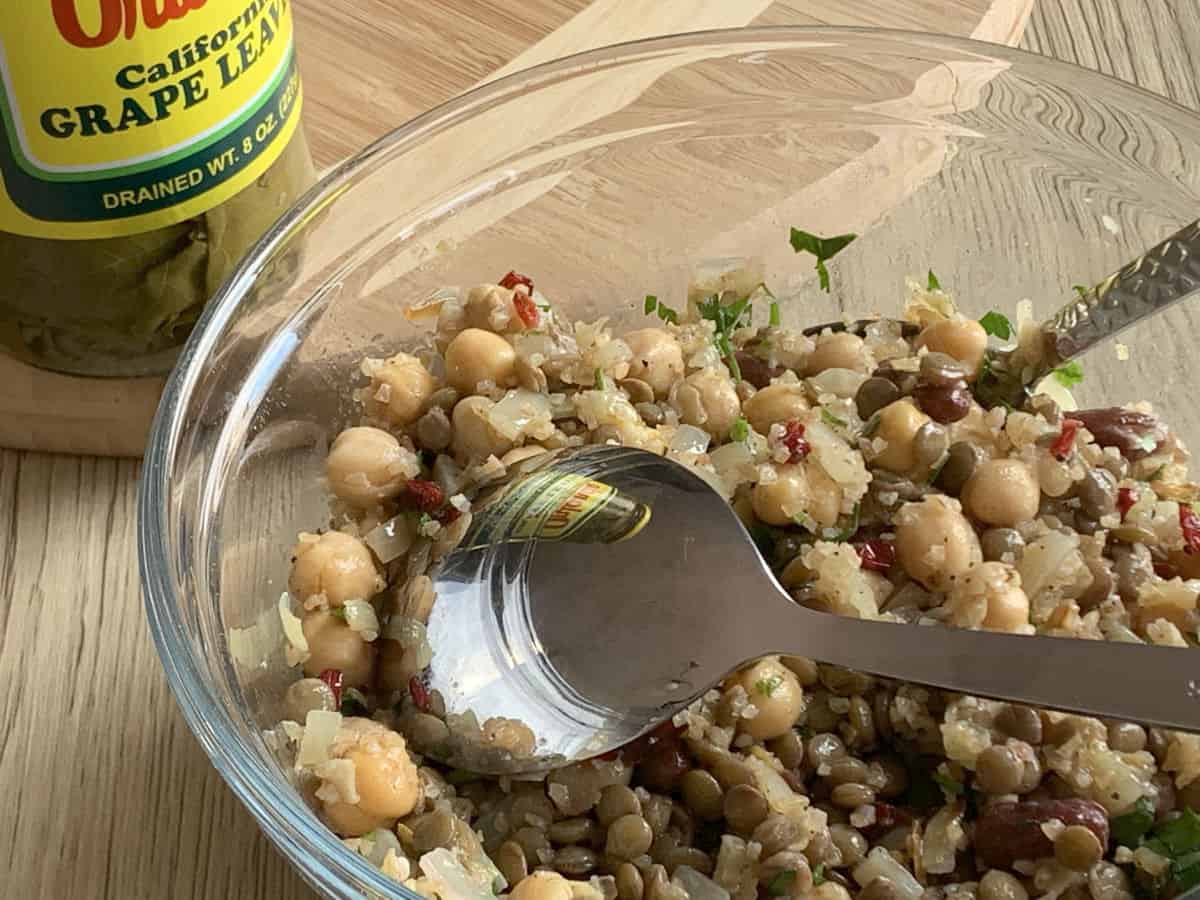
Taste as you go. The grape leaves carry some brininess even after soaking, so be mindful not to over-salt. Toss everything together until the filling is well combined and evenly coated with the onion and oil (Pic. 7).
Step 3: Roll the Tolmas
Cover a flat, clean surface with a plastic tablecloth or clean smooth cloth, this makes rolling easier and cleanup faster. Have your seasoned filling, the prepared grape leaves, and your cooking pot all within reach. Getting your station organized before you start rolling makes the whole process much more enjoyable and rhythmic.
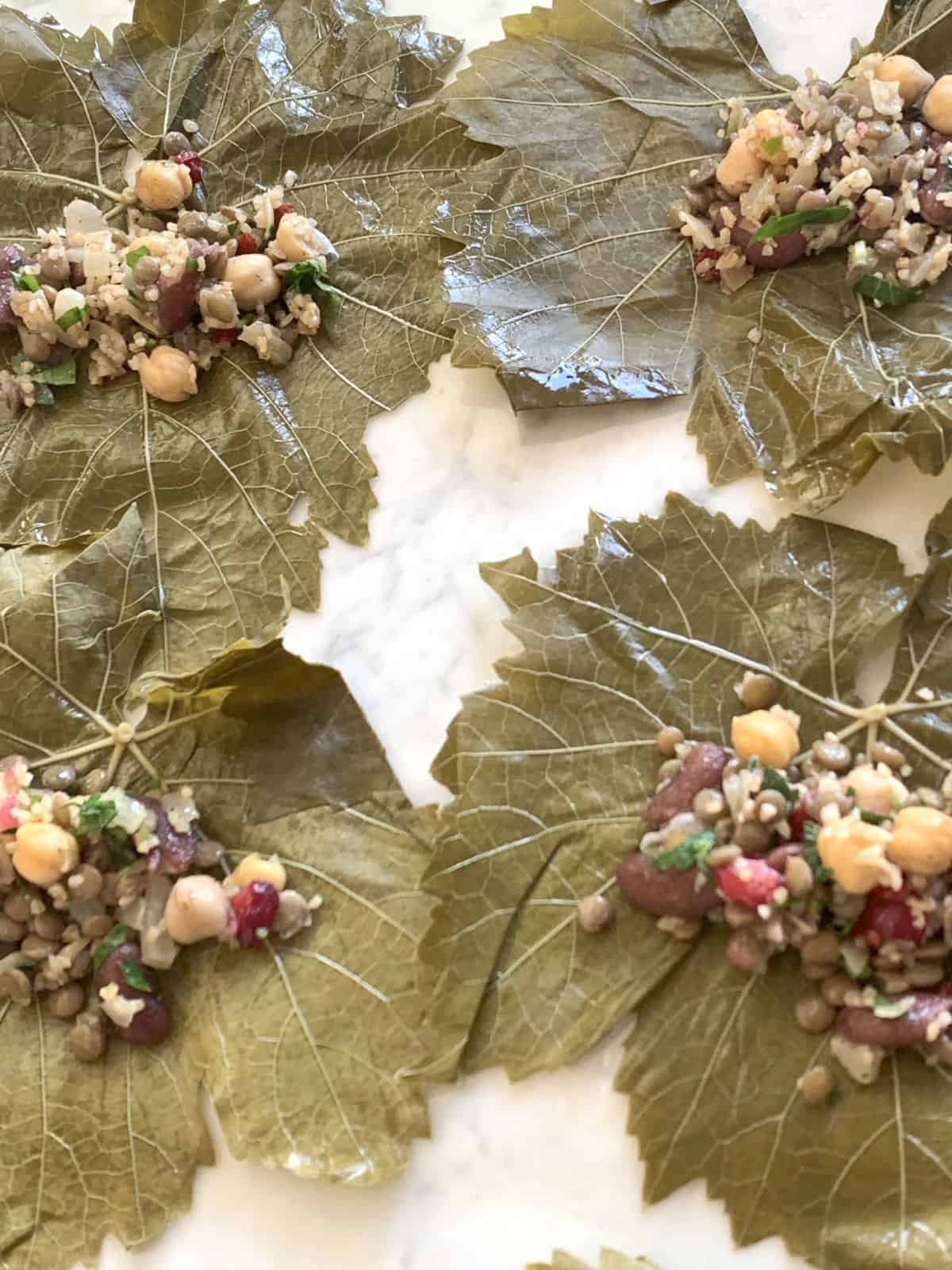
Place a grape leaf shiny-side down. Put a spoonful of stuffing on top of each leaf, just below the center of the leaf, near where the stem meets the leaf (Pic. 8).
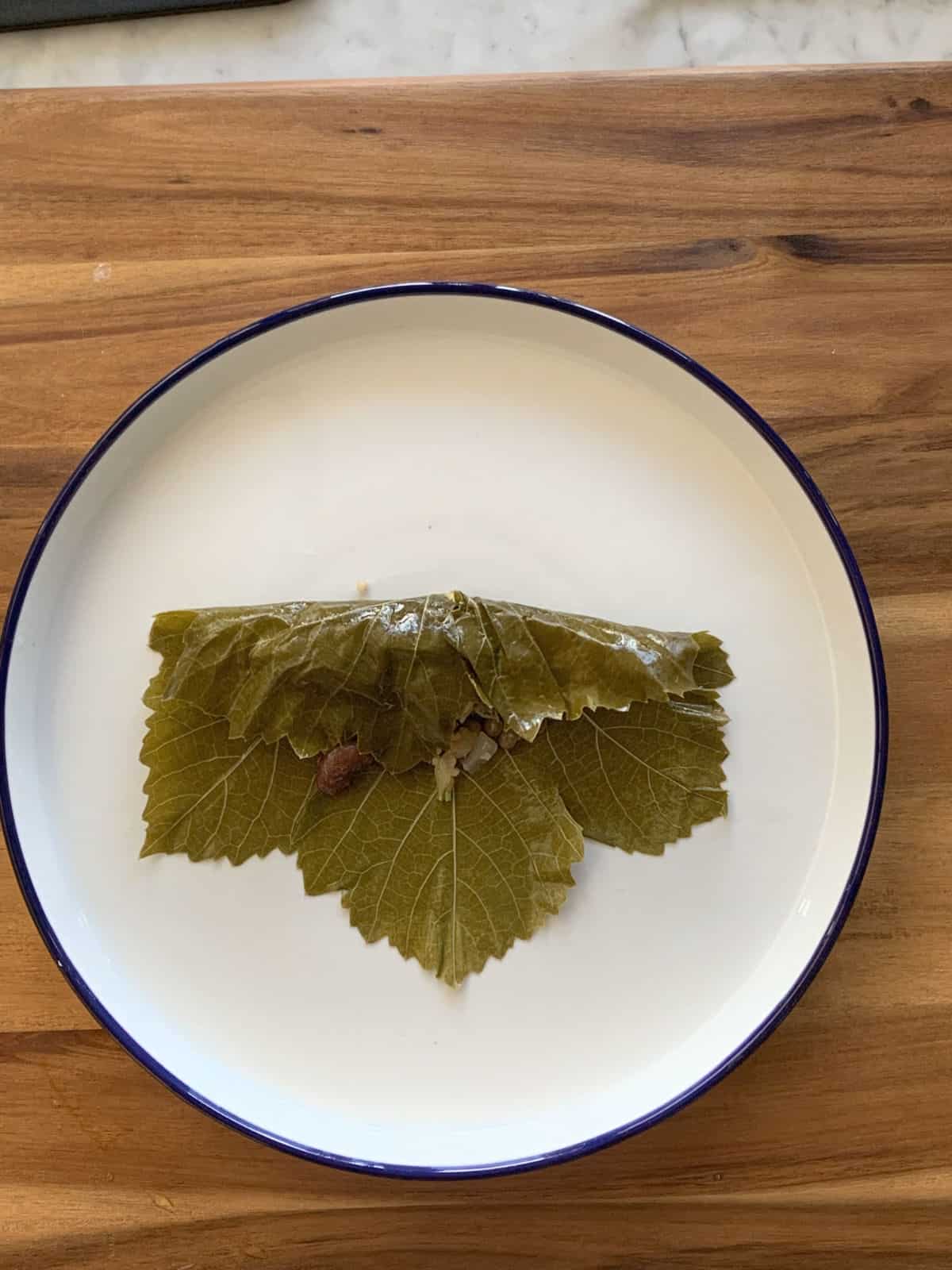
Use your fingers to shape the filling into a small log. Bring the leaf base over the filling and tuck it in.
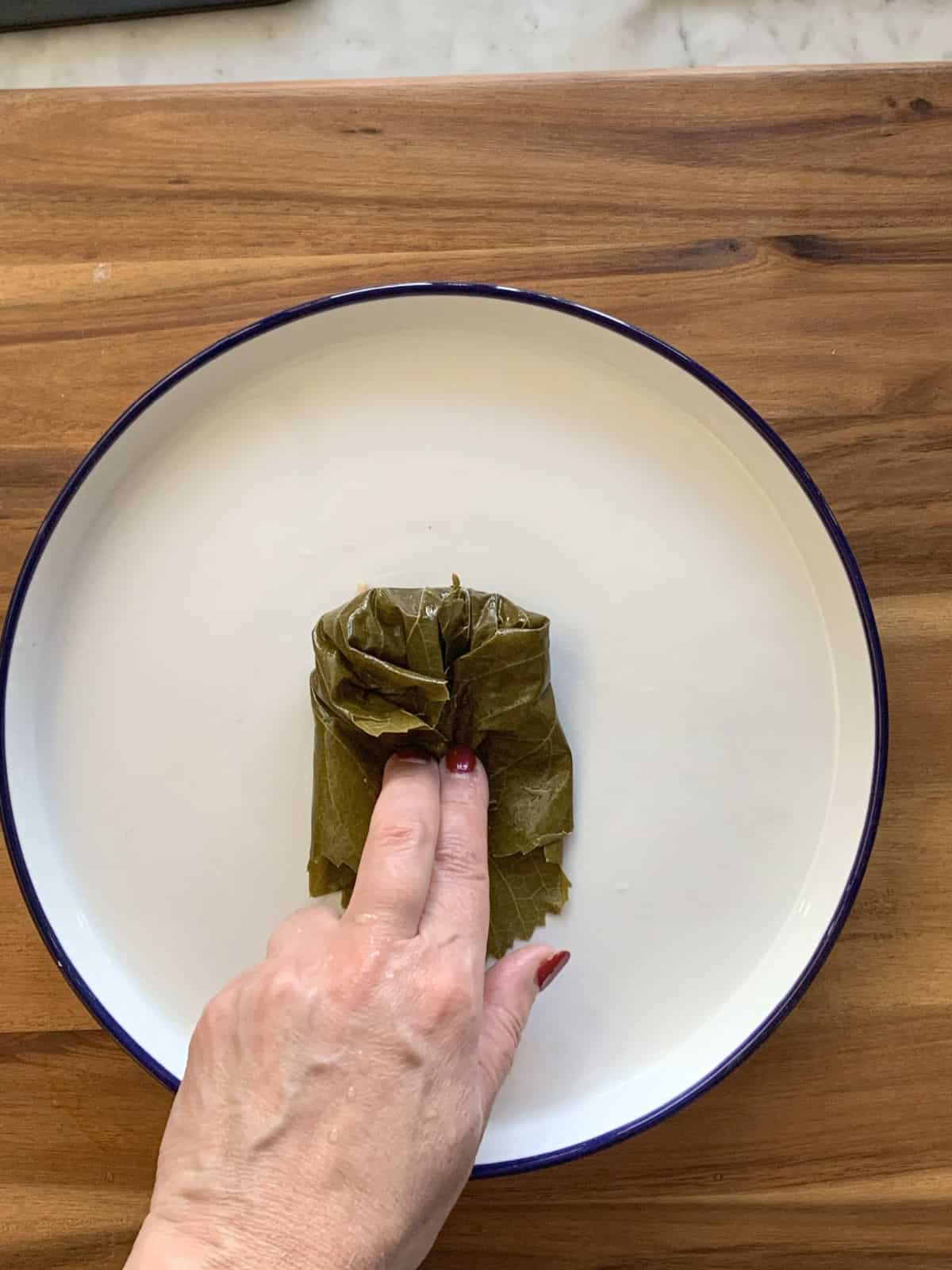
Now fold the edges of the leaf over the filling. Fold the left and right sides inward toward the center, like folding an envelope (Pic. 10).
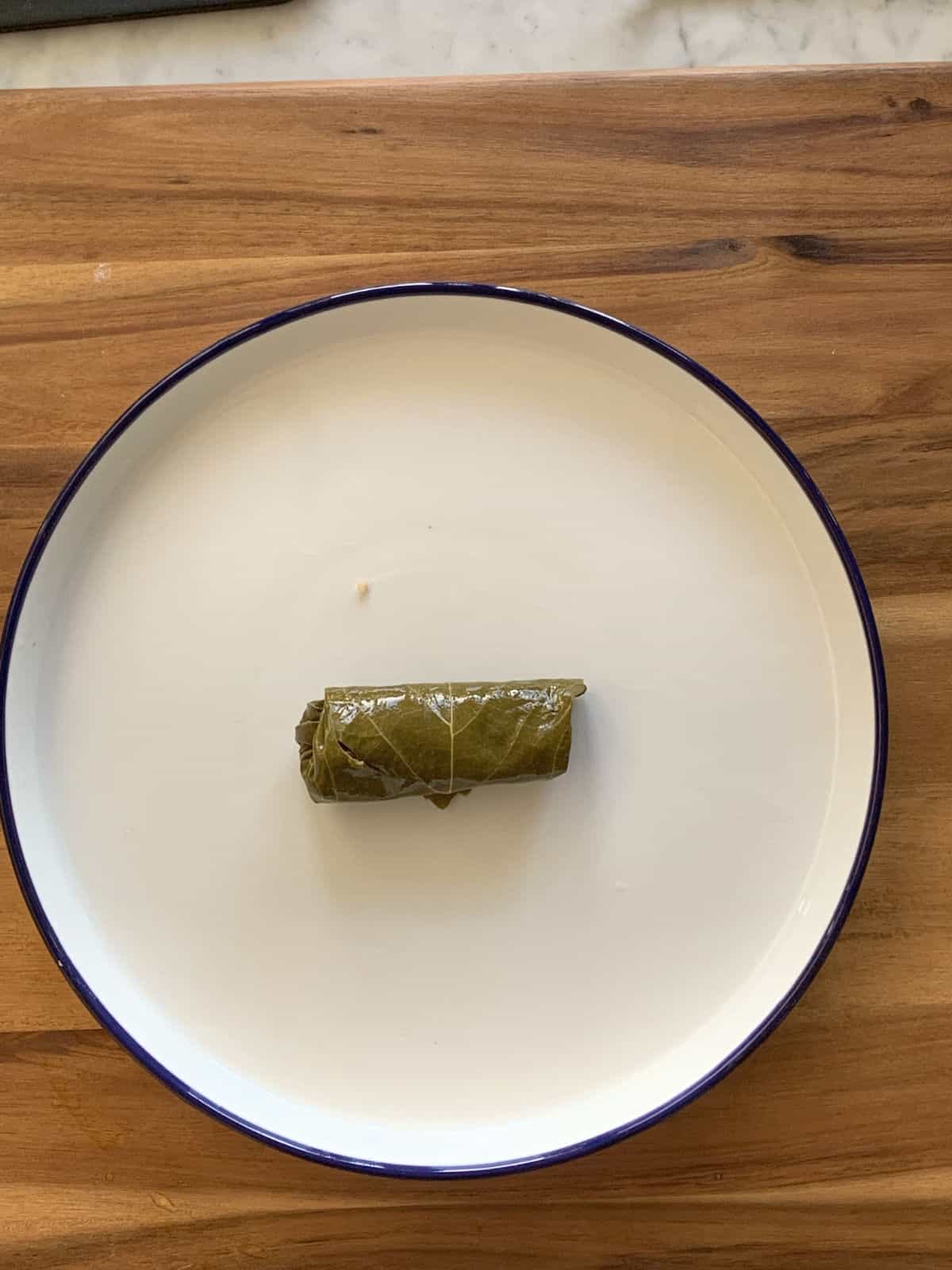
Then roll forward, wrapping the leaf firmly around the filling into a neat, compact cigar shape (Pic. 11). The roll should feel firm but not so tight that the leaf strains or tears. Set seam-side down on your work surface and repeat until all the filling is used.
Then fold the sides and keep rolling into cigar shaped little logs. They should not be too tight or too loose but rather firm.
Step 4: Arranging the Tolmas and Cooking
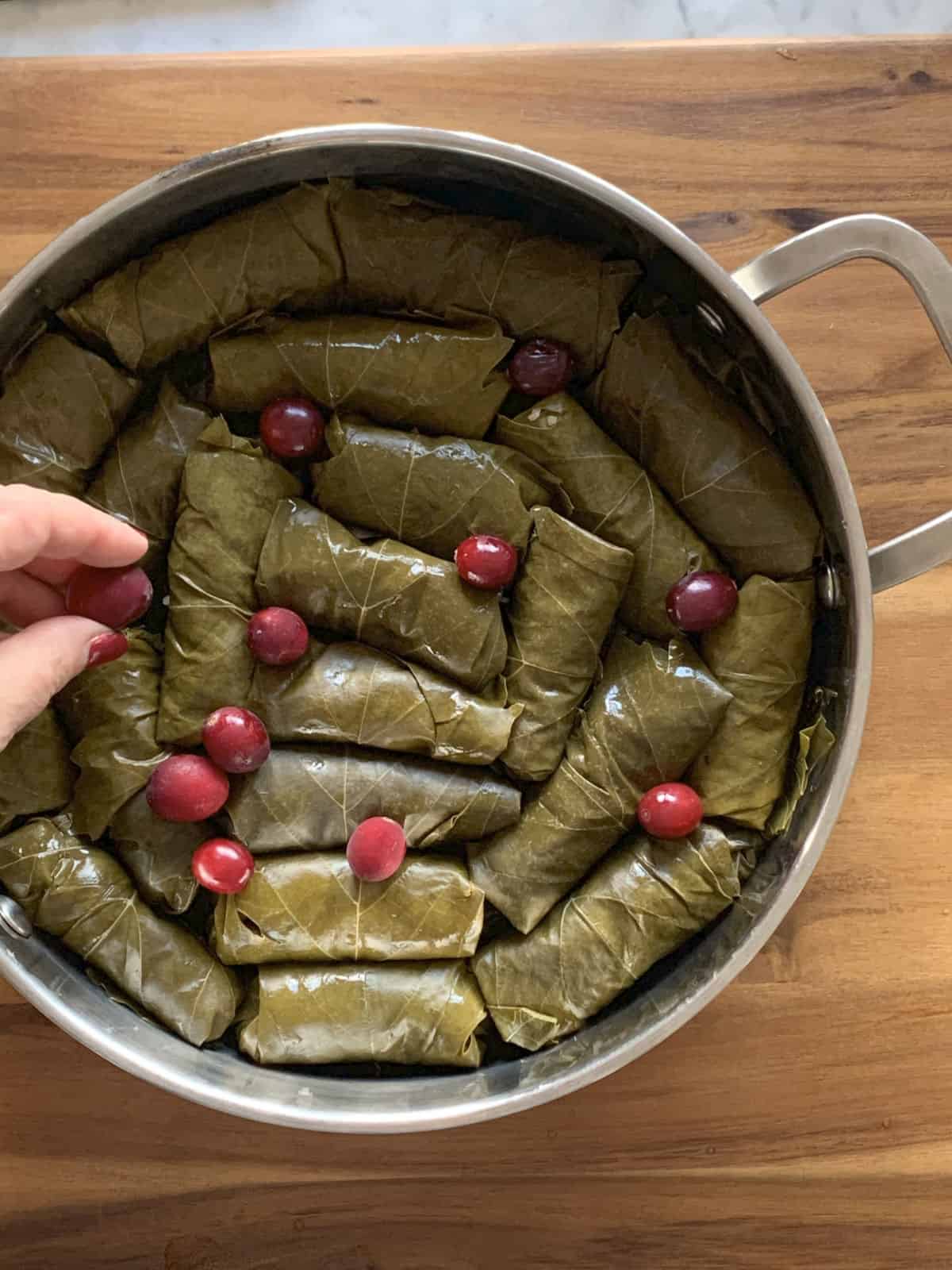
Layer the bottom of your cooking pot with a generous layer of grape leaves, use the smaller, torn, or irregular ones for this. This insulating layer prevents the bottom tolmas from scorching if the water reduces too quickly during cooking. Begin placing the rolled tolmas seam-side down in tight concentric circles, starting from the outer edge and spiraling inward. Pack them snugly so they support each other upright and stay closed. If you have more tolmas than fit in one layer, carefully add a second layer on top (Pic. 12).
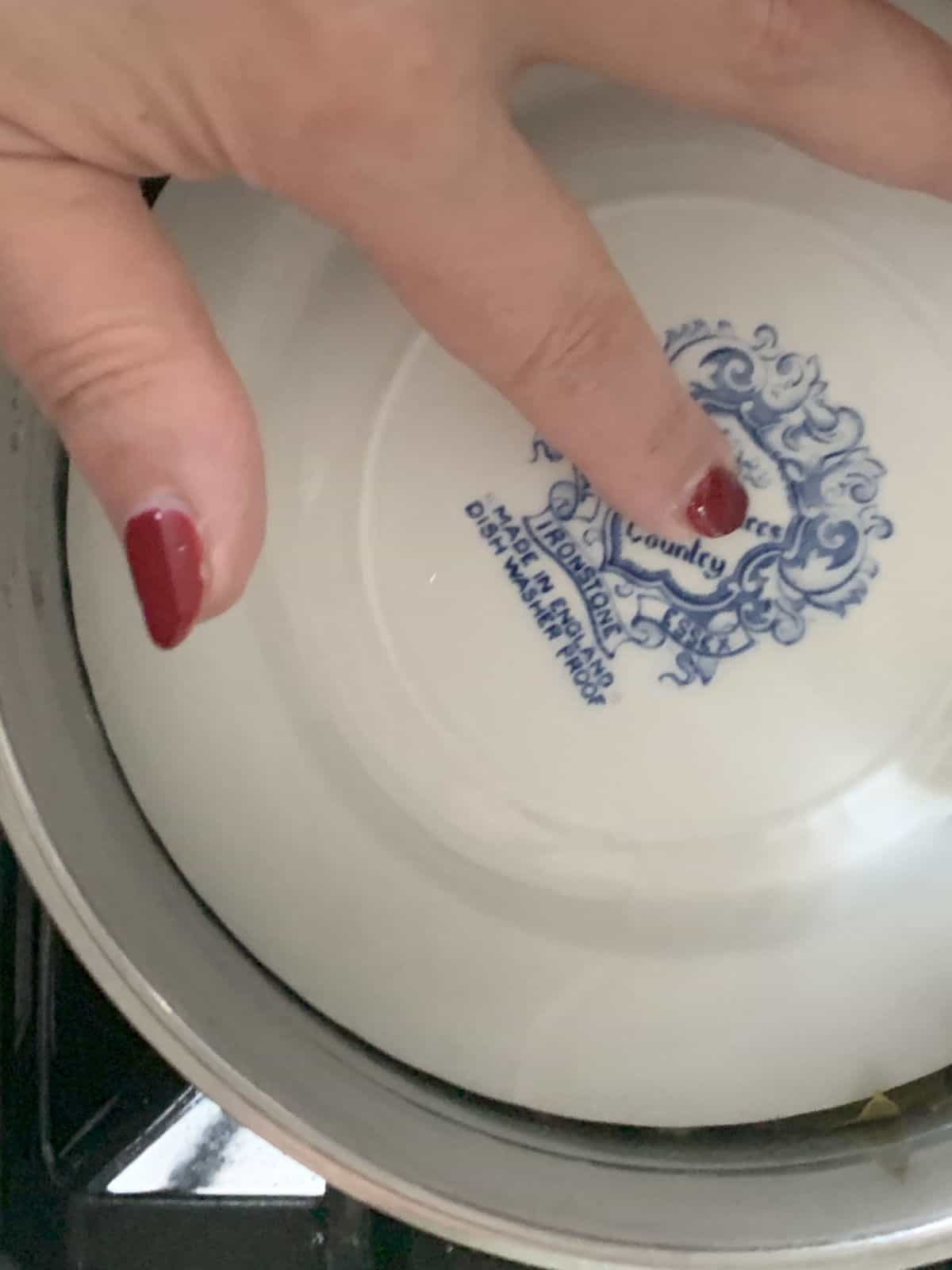
Find a non-reactive plate (ceramic, glass, or stainless steel) that is slightly smaller than the diameter of your pot’s interior. Press it firmly, upside-down, directly on top of the arranged tolmas (Pic. 13). This is an important step: the plate acts as a weight that holds the tolmas in place and keeps them submerged in the cooking liquid so they cook evenly and cannot unravel. Add enough hot water to just cover the plate.
Bring to a gentle boil over medium-high heat, then reduce to low, cover the pot with its lid, and cook for 40–45 minutes. The tolmas are done when the grape leaves are completely tender and the bulgur inside is fully hydrated and soft.
How do I know when the tolmas are done?
Carefully lift the plate and remove one tolma from the pot. Unwrap it slightly and taste a small piece of the grape leaf, it should be completely soft and silky, not chewy or papery. The bulgur inside should feel fully cooked and tender, with no gritty texture remaining.
Step 5: Then Plate and Serve
Remove the pot from the heat and let the tolmas rest, still weighted with the plate, for 15–20 minutes. This resting time allows the filling to firm up and the flavors to settle, so the tolmas hold their beautiful shape when you transfer them to the platter. Gently remove the plate and use a spoon or wide spatula to carefully lift the tolmas onto a serving platter. Garnish generously with lemon slices, fresh cranberries, and a few sprigs of parsley.
Frequently Asked Questions
FAQ: What if my grape leaves keep tearing?
It happens even to experienced tolma-makers! Simply overlap two smaller or torn leaves and roll them as one double layer. You can also press any holes closed with a small pinch of extra leaf. Since the tolmas are packed snugly in the pot, minor imperfections are completely fine. They will hold their shape beautifully during cooking.
My tolmas keep opening during cooking. What am I doing wrong?
The two most common culprits are: (1) the tolmas were not packed tightly enough in the pot, giving them room to shift and unfurl, or (2) the plate weight was insufficient or not positioned correctly. Make sure to pack the tolmas seam-side down as tightly as possible, and press the plate firmly and evenly across the surface before adding water.
The word “tolma” is it the same as dolma?
The word “tolma” is derived from the ancient Armenian word “tolum,” meaning grape vine or grape leaf. In different regions of Armenia, this stuffed dish is called tolma or dolma, and similar names appear throughout the neighboring Caucasus, Middle East, and Mediterranean. In some Western Armenian towns, rolled grape leaf versions were called “sarma” (from a Turkic word meaning “roll”), while meatless versions were called “yalanchi” (meaning “fake”). These naming traditions reflect the rich, layered history of Armenian cuisine.
Storage & Make-Ahead Notes
More from the Armenian Tolma Family
Tolma is one of the most beloved and versatile categories in Armenian cuisine – with over 100 regional varieties, it is a dish that truly tells the story of this culture. If these Lenten Grape Leaf Tolmas with Legumes spoke to you, here are more to explore from Cafe Osharak:
More Armenian Festive & Seasonal Dishes

Did You Make These Tolmas?
I would genuinely love to hear from you! If you tried this Armenian Lenten Grape Leaf Tolma with Legumes, please leave a star rating and share your experience in the comments below. Tell me which legume combination you used, whether you enjoyed them warm or cold, and whether you served them for Lent, Christmas, or just a weeknight dinner. Your feedback not only makes my day, it helps other readers find this recipe and feel inspired to try it.
Armenian Lenten Grape Leaf Tolma with Legumes

Ingredients
- 250 g grape leaves
- 150 g garbanzo beans
- 150 g lentil
- 100 g red beans
- 50 g bulgur
- 150 g onion
- 75 g olive oil
- 1 tablespoon barberries
- 8-10 cranberries
- 1 teaspoon salt
- 1/2 teaspoon pepper
Instructions
Legume Stuffing
- In a big bowl add all the beans, lentils, and bulgur.
- In a frying pan add the olive oil and saute the diced onions over medium heat for 8-10 minutes. The onion will start sizzling and gradually change from translucent to a golden brown.
- Pour the caramelized onion with the oil onto the bean mixture and toss them all together.
- Add the chopped herbs; season with salt, pepper, and cranberries.
Preparing Grape Leaves
- Pull the grape leaf bundles from the jar, and soak them in hot water for 5 minutes to remove the metallic brine taste and any unnecessary brining salts.
- Trim the grape leaf stems if they are too long.
- Open and smoothen the leaves and place them shiny side down on a flat surface.
Assembling and Cooking tolma
- Place the grape leaves (shiny face down) on a surface.
- Put a spoonful of stuffing on top of each leave, just under the stem cavity, and form an oblong cylindrical shape across the leaf. With your hands, help the filling to stay in place.
- Start folding: Bring the leaf base over the filling and tuck it in.
- Then fold the sides and keep rolling into cigar shape little logs. They should not be too tight or too loose but rather firm.
- In a cooking pot arrange a few grape leaves on the bottom of the pan, and start arranging the rolled tolmas along the perimeter and spiral inwards.
- Once all the tolmas are arranged, place a non-reactive plate (that is a little bit smaller than the cooking pot) upside down and on top of the tolmas to keep them intact and submerged.
- Pour water carefully, just to a level, that it washes-off the edges of the plate.
- Place pot on a stove and bring to a boil. Once the water starts boiling, dial the heat down to the lowest setting and cook slowly for 30-40 minutes.


Hello,
I just wondered where you are located, because my family has called warm rolled grape leaves “sarma” and cold rolled grape leaves “yalanchi.” Warm stuffed green peppers and tomatoes we call “dolma.”
Hi, Janet, thanks for your comment. I live in Colorado but I am originally from Yerevan, Armenia. Tolma is the name of the dish used in different regions of Armenia, both in Western and Eastern Armenia. The variations and types of tolma are endless.
I am familiar with the terms “sarma” and “yalanchi.” The name “sarma” in some Western Armenian towns was derived from a Turkic word that means “rolled.” “Yalanchi,” meaning “fake,” referred to any tolma which did not contain meat. Squash, tomatoes, and peppers stuffed with meat were called “dolma”. For over 500 years under Ottoman Empire rule, many traditional and local dishes were given Turkic names (sarma, yalanchi, etc.). From an etymological standpoint, “tol” or “tolum” is the Armenian name of the grape leaves and has ancient linguistic roots (connects to tolma).
Honestly, this puts standard modern holiday side dishes to absolute shame. There is a deep, rustic history in a recipe like this that you can really taste. The pumpkin absorbs all the sweetness from the honey and infuses it right back into the rice filling.