
Homemade Za’atar Recipe (An Armenian-Inspired Spice Blend)


This post may contain affiliate links. As an Amazon Associate, I earn from qualifying purchases. See my Affiliate Disclosure .
Za’atar shows up in spice aisles everywhere now. It’s usually pre-mixed and sold in small jars, but homemade za’atar is a different thing entirely. Freshly toasted seeds, earthy potpourri of herbs, and a gentle tang come together into this rustic blend that feels both ancient and deeply alive.
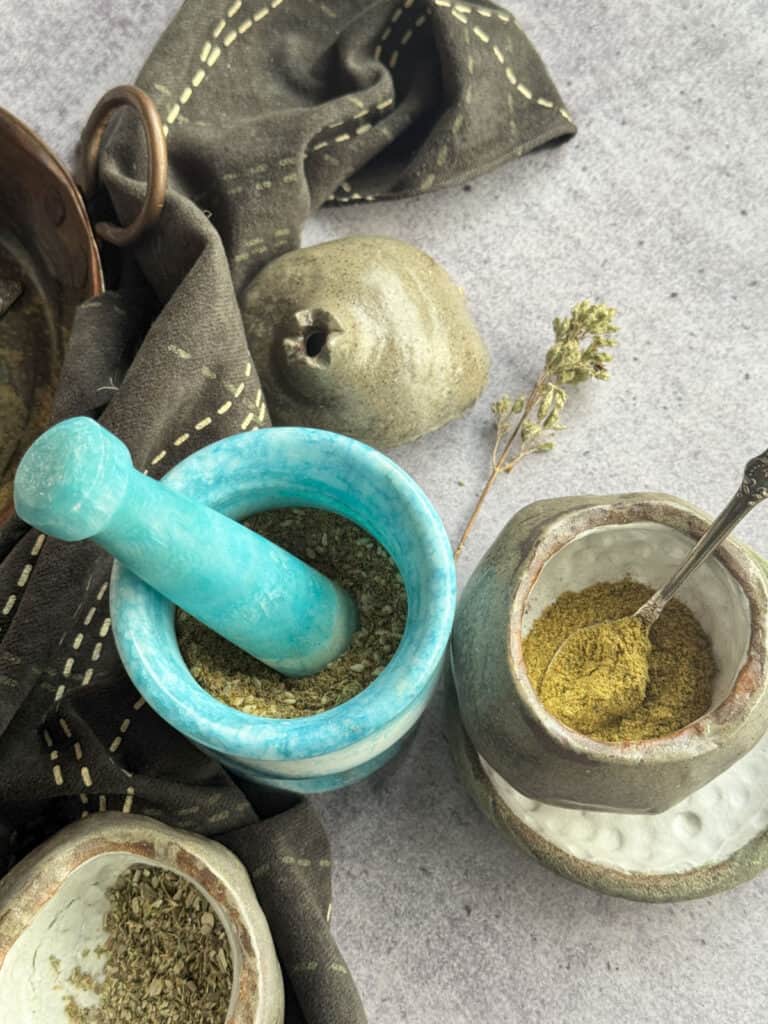
It also sits inside a much older and less familiar tradition. My grandmother made tatkhan, an Armenian word for a seed-and-herb dip, from watermelon, pumpkin, and sunflower seeds she saved and sun-dried herself, mixed with savory, oregano, and thyme, and ground fine in her small handheld coffee grinder. It was a quick breakfast or snack in between meals. Back then, I didn’t understand, but now I know how nutritionally dense the nuts and seeds are.
This isn’t her recipe. It’s the version built around toasted sesame and sumac that most people recognize as za’atar today.
Ways to Use It
I like to keep a jar of freshly made Za’atar (tatkhan) in my pantry.

Chronicle of Armenian Za’atar
I remember my grandmother made tatkhan (թաթխան), an Armenian word for dip. Not a recipe per say. Hers was made from watermelon, pumpkin, and sunflower seeds, along with less-than-perfect nuts. She mixed them with Armenian herbs such as tsitron (summer savory), oregano, and thyme.

It was part of our breakfast table. We also ate it simply by dipping bread into the mixture. I remember her carefully saving watermelon seeds, washing them, and spreading them in the sun to dry. Afterward, my grandmother would grind them in her small handheld coffee grinder.
Only later did I understand that her tatkhan was one of many variations found throughout Greater Armenia. Seed, nut, grain, and herb-based dips were deeply rooted in regional Armenian cooking and were widely preserved in the diaspora.
Culinary researcher Sonia Tashjian has documented this tradition through her family culinary chronicles, gathering recipes and memories that survived in Armenian kitchens rather than cookbooks. I first came across her research through the Houshamadyan project‘s archives on regional cuisine. Tatkhan and Tsahin (ծահին) are part of this larger story.
The variations were as diverse as the regions themselves. In Akn, tsahin bread was made with dried tsitron, basil, fenugreek leaves, toasted sesame, and red pepper. Arabkir had green and red versions, including one made with sun-dried tomatoes, basil, and hot pepper. Tigranakert had varieties based on sesame or chickpeas. In Kharpert, a related preparation was known as tatkhon. In Musa Ler and the villages of Kessab, it was called k’mmaun.
These variations show how widespread this tradition once was, and how much of it is now endangered. I hope to bring some of these nearly forgotten tatkhan recipes back to the table, testing and developing them as they were remembered.
What I remember as a simple breakfast food was also a way of preserving food, using what was available, and keeping a piece of home alive.
A Few Things Worth Knowing

Essential Grocery List and Ingredient Notes

Notes & Substitutions
The recipe is very flexible.
Special tools you’ll need
Estimated Time
Recipe Steps at a Glance
Step-by-step: How to Make Zaatar

Step 1: Place the sesame seeds in a dry skillet over medium heat. Toast them, stirring often, until they turn a light golden color and smell nutty, a few minutes. Watch them closely near the end, sesame seeds go from golden to burnt quickly.

Step 2: Take the skillet off the burner and add the dried oregano while it is still hot, . You’re not cooking it further, just waking up its oils in the residual heat.
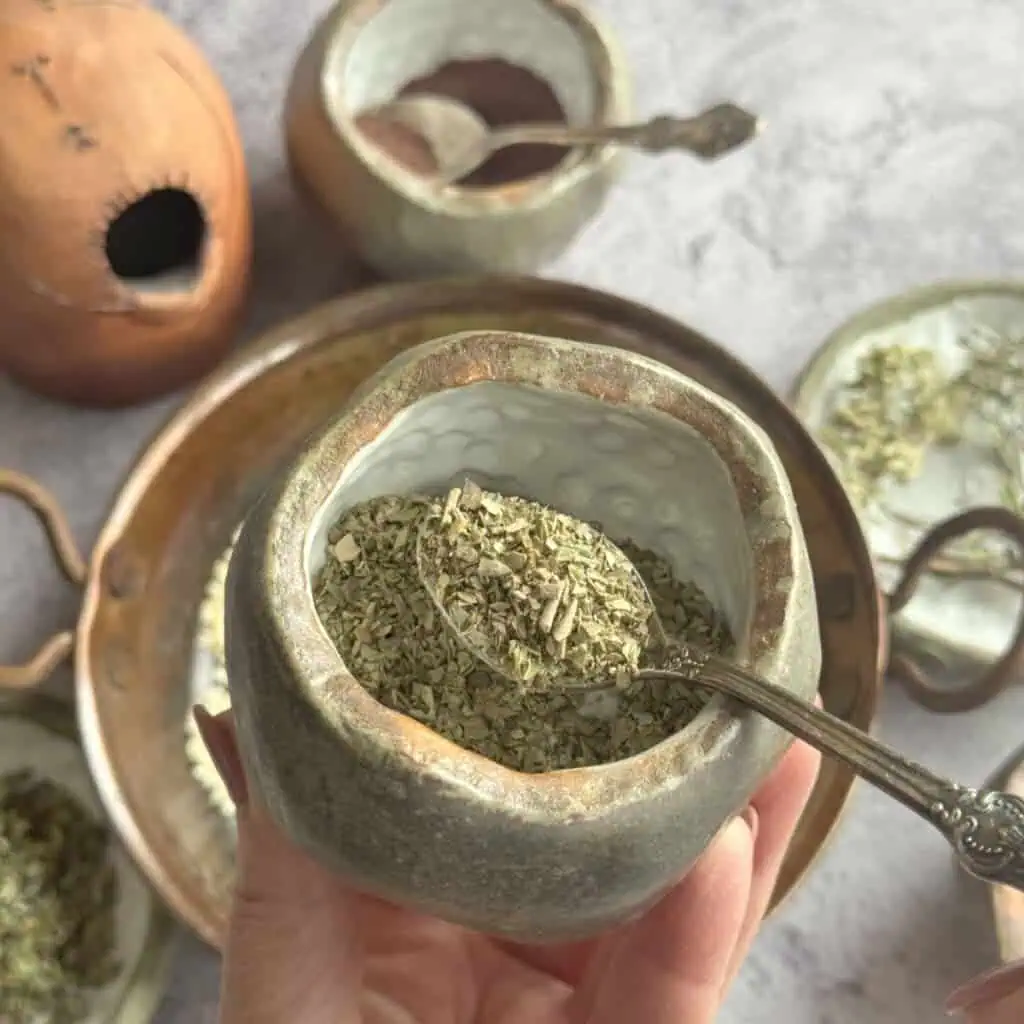
Step 3: Add the dried thyme next. The skillet’s warmth is enough to bring out its fragrance without scorching it.

Step 4: Add the sumac and the salt. You’ll start to see the color come together here, golden sesame, brick-red sumac, flecks of green herb.
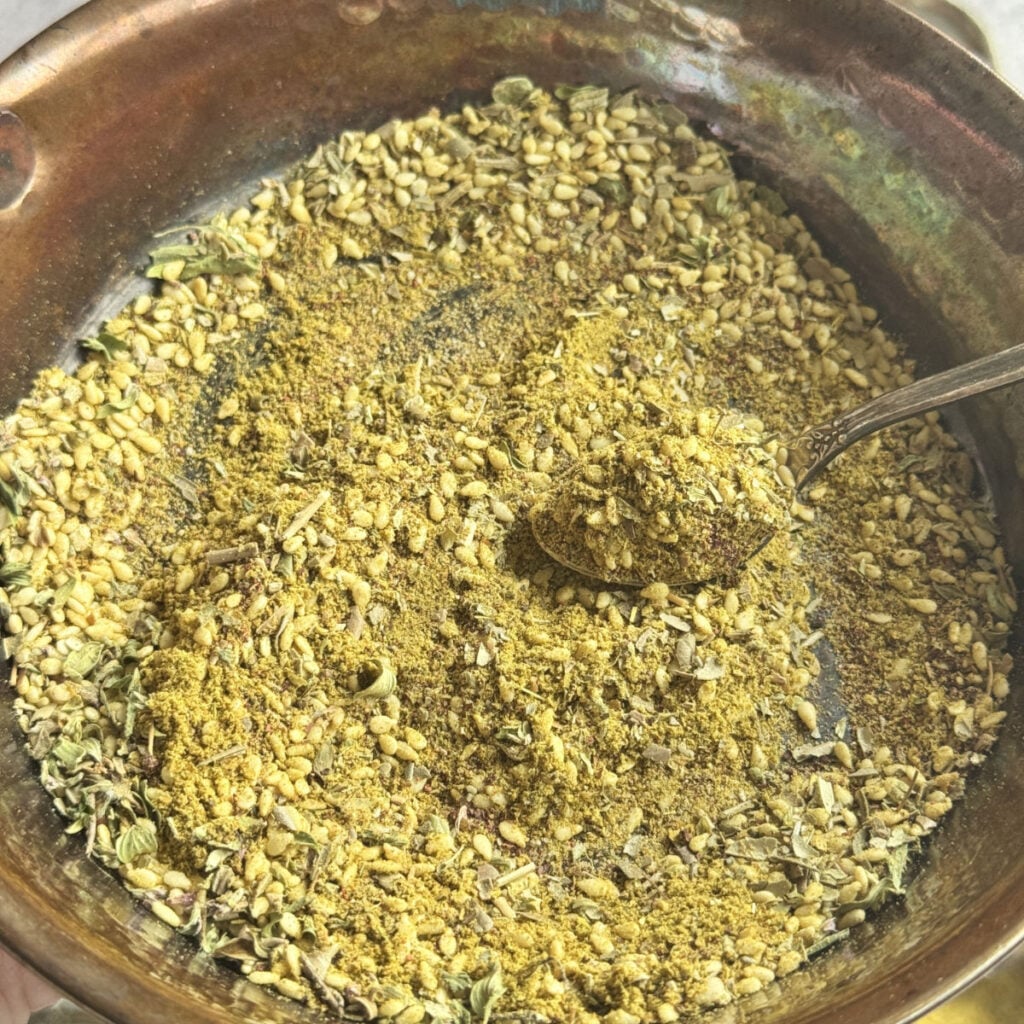
Step 5: Take the skillet off the heat and mix everything together while it’s still warm. You want it evenly combined before it goes into the mortar.

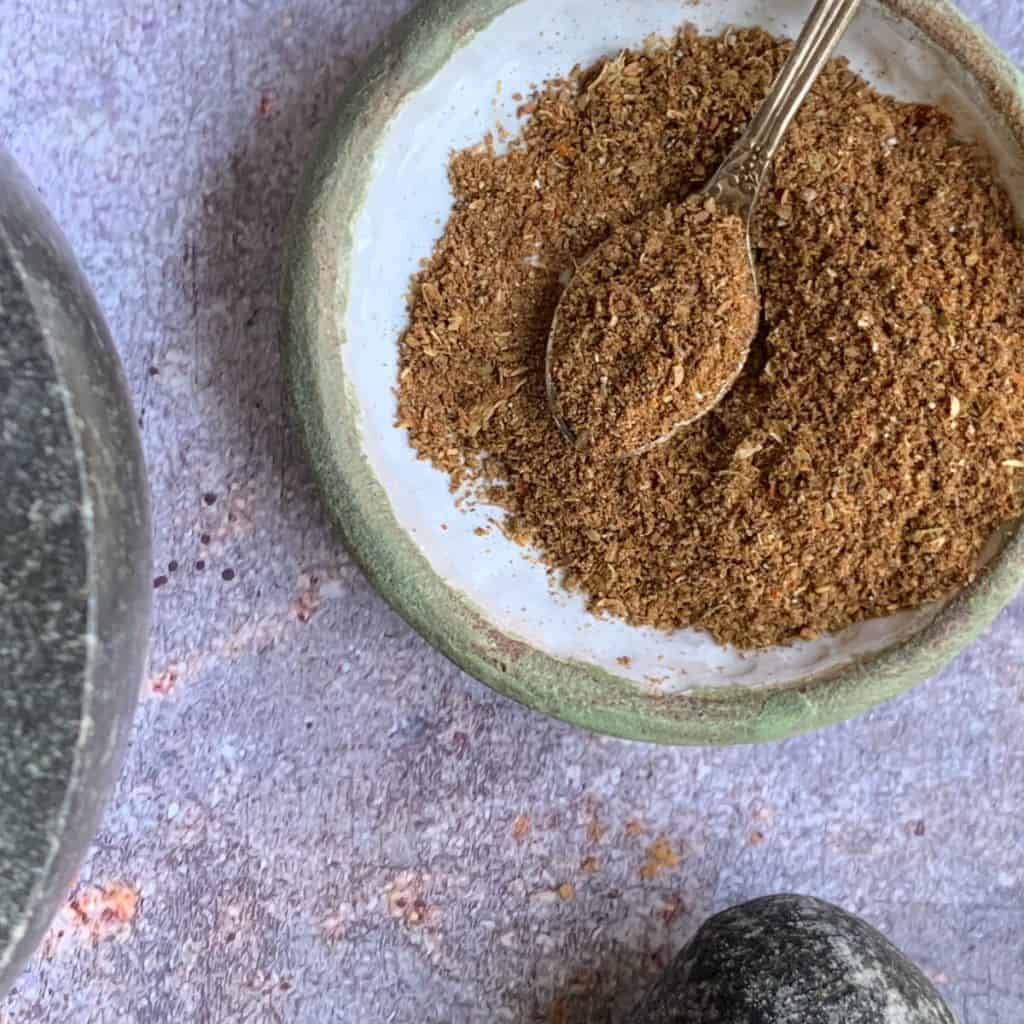
Step 6: Work the mixture in a mortar and pestle just enough to release the oils from the sesame seeds and coat the herbs, you’re not aiming for a fine powder, a little texture is the point. Transfer to a jar, cover, and store.
Tips and Wisdom from Cafe Osharak

Frequently Asked Questions

What is za’atar made of?
This homemade version is toasted sesame seeds, sumac, dried oregano, dried thyme, and salt, ground together into a coarse blend. Some traditional Middle Eastern versions also include marjoram, this one leans a little more Armenian-Mediterranean in its balance.
How long does homemade za’atar keep?
Stored in a sealed jar in a cool, dry spot, it keeps well for months, and can be refrigerated for up to a year. The flavor is brightest in the first few months, when the toasted sesame and dried herbs are at their most fragrant.
Is za’atar the same as sumac?
No. Sumac is just one ingredient in za’atar, the tangy, brick-red spice that gives the blend its characteristic tartness. The berries grow in clusters that stand upright like small red torches, and they’ve been dried and ground into spice for thousands of years.
Za’atar is the full mixture: toasted sesame, sumac, dried herbs, and salt.
What do you eat za’atar with?
Bread and olive oil are the classic pairing, torn pita or flatbread dipped straight through both. It’s just as good spooned over yogurt or labneh, sprinkled over roasted vegetables, or stirred into a dish of hummus right before serving.
How to store za’atar?
Keep it in a sealed jar, away from heat and direct light. You can store it in the refrigerator, for up to a year, and I do the same with this version.
More Recipes to Try from Cafe Osharak
More from the Armenian and Middle Eastern meze table
Try Other Pantry Essentials from Cafe Osharak

Homemade Za’atar Recipe
Ingredients
- 2 tablespoon Sesame Seeds
- 1 tablespoon Oregano fine ground
- 1 tablespoon dry thyme or oregano leaves
- 2 tablespoon Sumac
- 1/2 teaspoon Salt
Instructions
- Place the sesame seeds in a skillet and toast over medium heat, stirring often, until light golden and fragrant, a few minutes.
- Add the dried oregano to the hot skillet.
- Add the dried thyme.
- Add the sumac and salt.
- Remove from heat and mix everything together while still warm.
- Transfer to a mortar and pestle and grind briefly to release the sesame oils and coat the herbs, leaving some texture. Store in a covered jar; keeps refrigerated for up to a year.