Homemade Kefir -Fermented Milk Drink
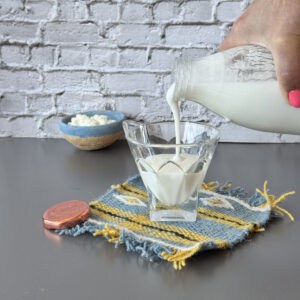
Making homemade kefir is easy, economical, and versatile. The health benefit of kefir are widely known. All you need is kefir grains.
Save
Pin Recipe
Print Recipe
Ingredients
- 5 tablespoon Active Milk Kefir Grains heaping spoon
- 5 cups Whole Milk
Instructions
- Place your active kefir grains in a clean glass jar.
- Add the whole milk and give a gentle stir with a wooden or plastic spoon.
- Cover your jar with a cheesecloth or a napkin securing it with a rubber band.
- Leave the jar on a cupboard or a counter at room temperature for 12-24 hours. The kefir is ready when pockets of whey start to appear, and the milk has thickened considerably.
- Set a fine sieve over a glass bowl. Gently stir the fermented milk kefir with a rubber spatula and strain the whole thing. Use the spatula to push the kefir through the stainer. The grains will stay behind.
- Retain the grains for your next batch of milk kefir.
- Pour the finished milk kefir into a new clean glass jar and close it with the lid.
- The grains are ready to use again or stored in the fridge by adding enough milk to cover the grains.
Notes
Step-by-Step Photos: My blog post includes helpful step-by-step photos to help guide you through making this recipe.
Servings: 4 cups
Tried this recipe?Mention @osharak.cafe or tag #osharak.cafe!
