
Armenian Stuffed Flatbread Loaded with Greens (Jingalov Hats)

This post may contain affiliate links. As an Amazon Associate, I earn from qualifying purchases. See my Affiliate Disclosure .
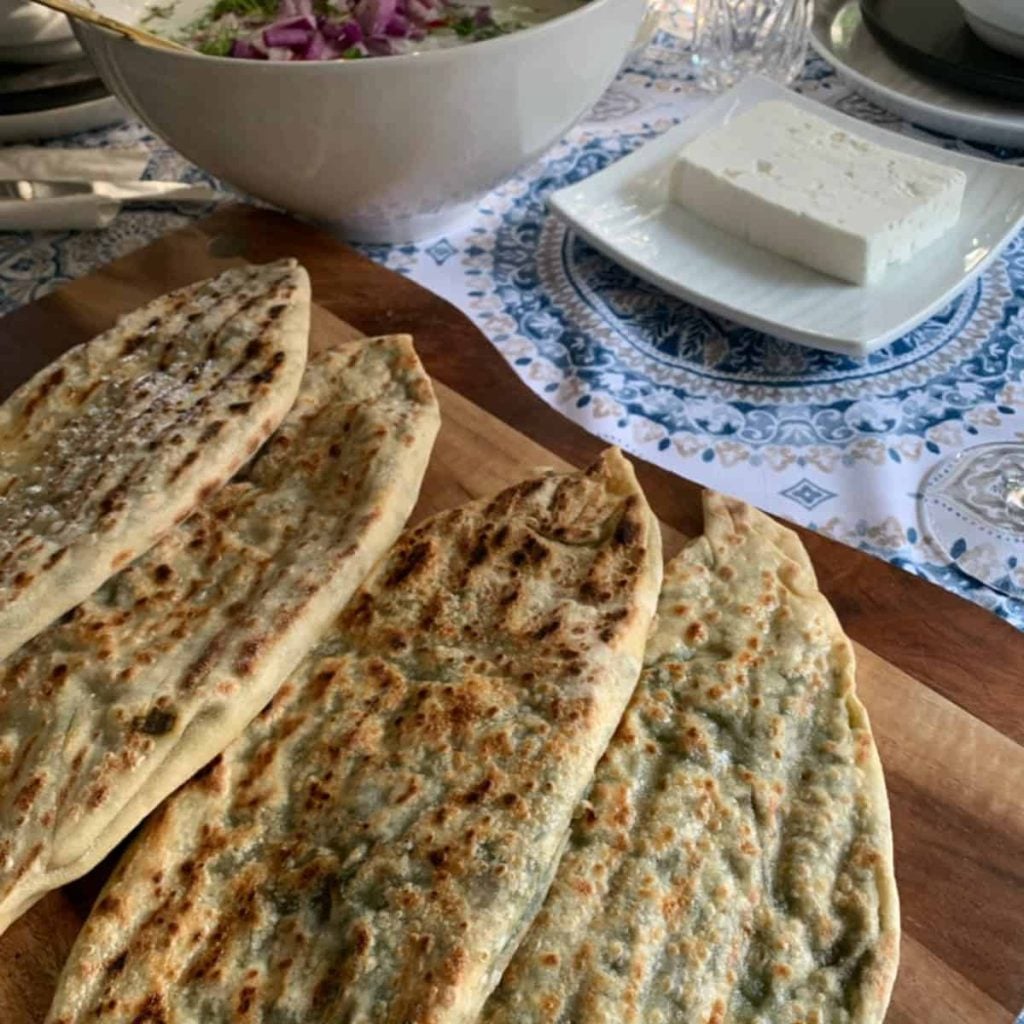
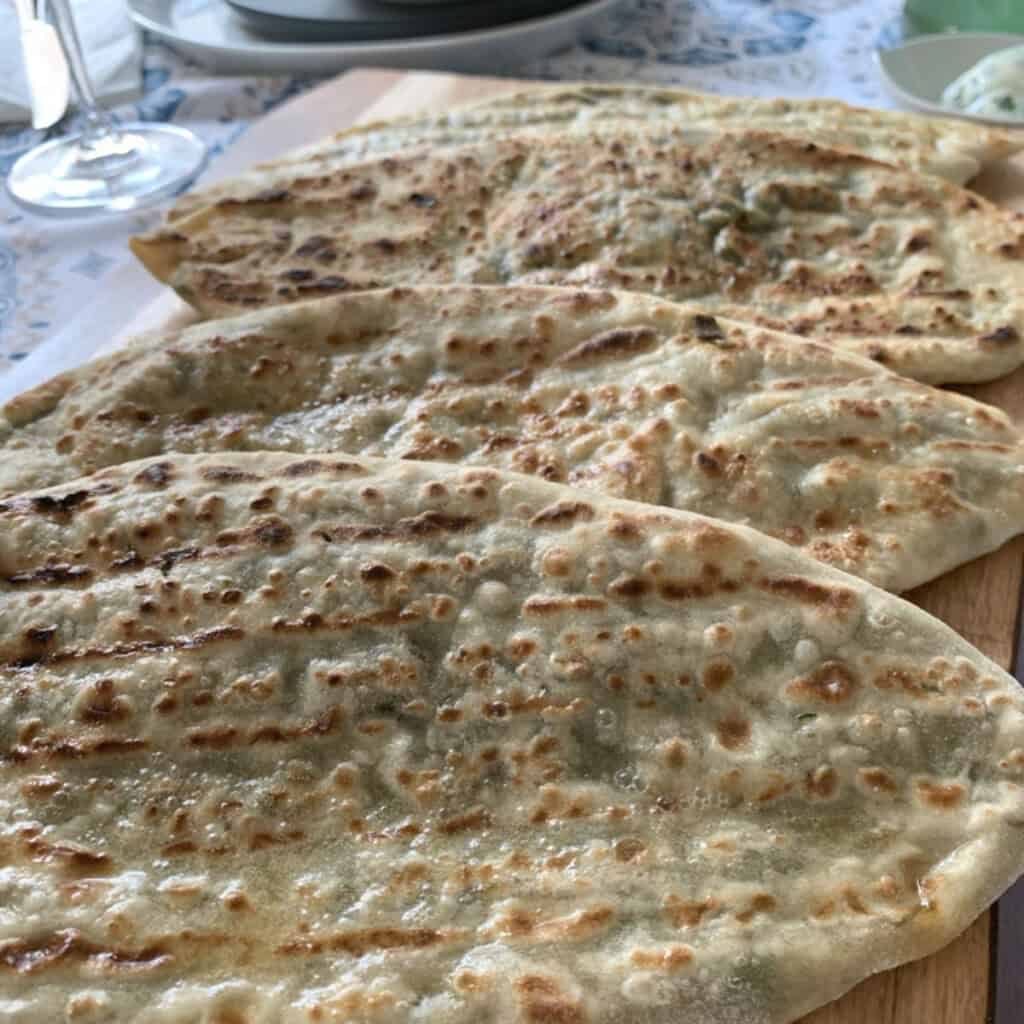
Jingalov Hats is an un-yeasted flatbread filled with dozen of varieties of chopped seasonal greens, cooked on a hot griddle until blistered and golden, and finished with a brush of softened butter. It is vegan before the butter, completely flourishes with whatever greens are in season, and every single one tastes different from the last.
Jingalov Hats (Ժինգալով հաց) is a simple and rustic stuffed flatbread, packed with seasonal greens and herbs. It is authentic to the Zangezur, Syunik, and Artsakh regions of Armenia but is now beloved across the country and far beyond its mountain origins.
What to serve with this dish?
If you are wondering what to serve with Jingalov Hats, think of it as a comforting bread that feels like a main course. This greens-forward flatbread pairs beautifully with cool, creamy accompaniments, light salads, and simple sweets that don’t compete.
Table of Contents
Chronicles of Jingalov Hats
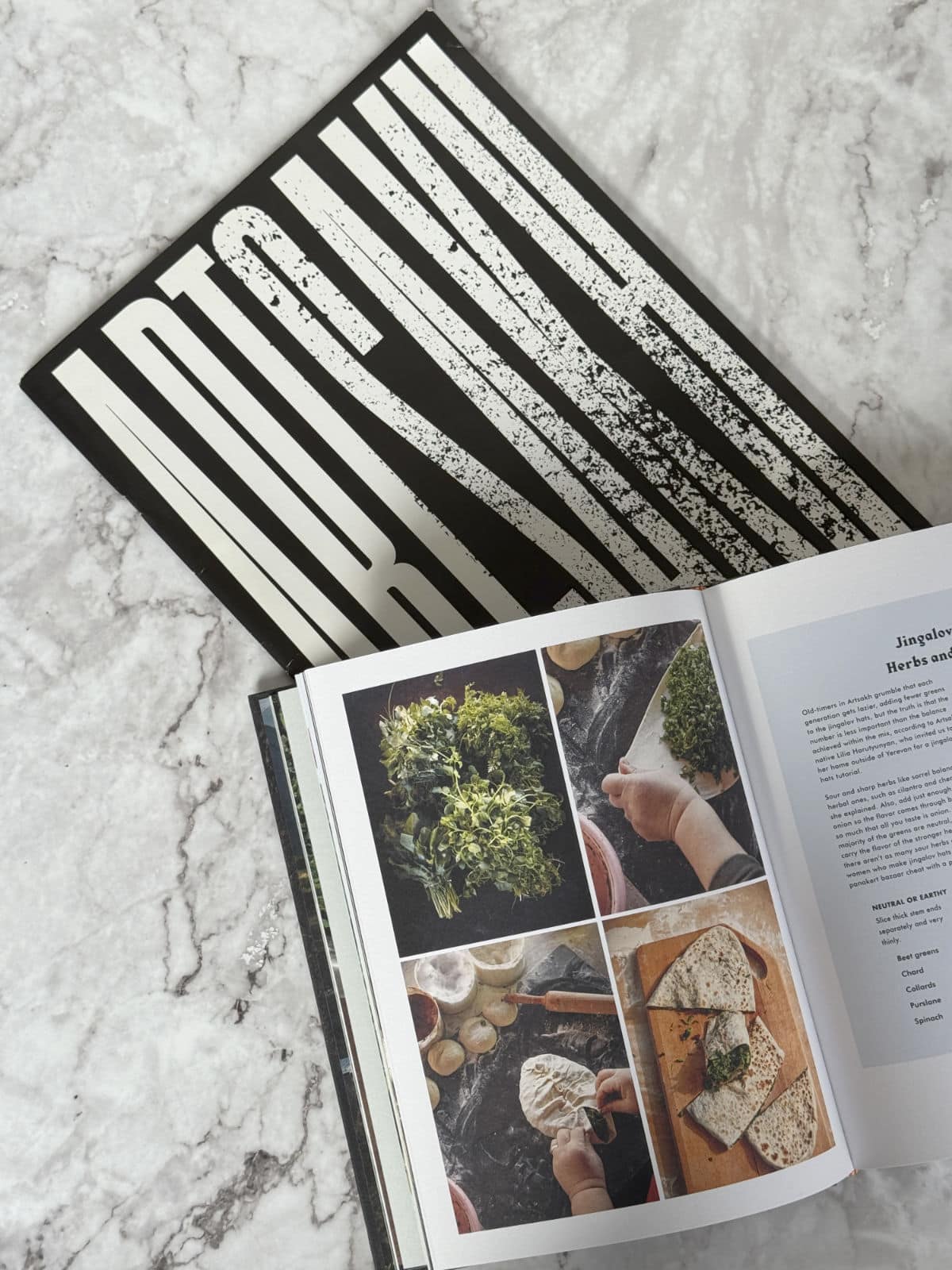
Jingalov Hats has always been known to Armenians, and very recently it became known to the world through a book.
Lavash – written by Kate Leahy, Ara Zada, and John Lee – brought Armenian culinary culture to an international audience with the kind of genuine curiosity, sincere storytelling, and photography that makes you feel the heat of the tonir through the page. Their dedicated Artsakh project within that work put Jingalov Hats squarely at the center of what Armenian mountain cooking means and where it comes from. I have both the book and the Artsakh edition on my shelf, and I return to them often. Not just for recipes, but for the reminder that food documentation is also a form of witness.
Artsakh, the Armenian name for Nagorno-Karabakh, is where Jingalov Hats is most deeply rooted. In September 2023, following a military offensive by Azerbaijan, the entire ethnic Armenian population of the region was displaced in what international observers and Freedom House have documented as ethnic cleansing. Over 100,000 people left within days.
Since then, I have had quiet conversations at street fairs, at small market stalls, outside corner bakeries, with Artsakhtsi women who carried with them the knowledge of this bread. Knowledge that belongs to their hands, their memory, and their mountains. They roll the dough on folding tables. They forage whatever grows nearby. They are teaching anyone who will stop and watch. The Smithsonian Folklife Magazine has written about how food and cultural practice are central to how Artsakhtsi identity is being preserved and carried forward. Every Jingalov Hats made outside of Artsakh is, in some way, an act of that survival.
Recipe Highlights: Why You’ll Love This Recipe
Essential Grocery List and Ingredient Notes
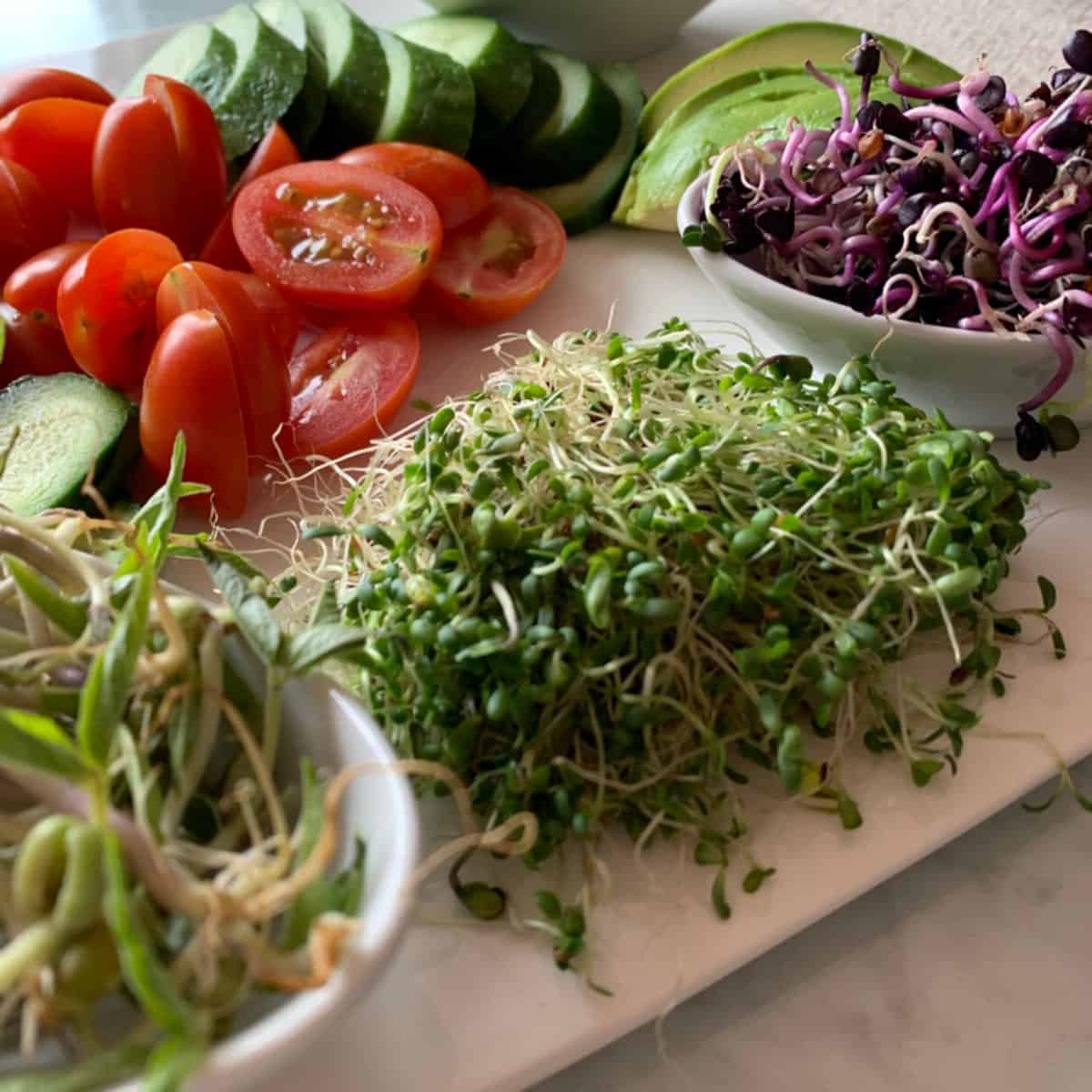
Notes about greens
In short, the answer is any greens and herbs that grow that season wild or cultivated. Typically 8-12 variety of seasonal greens assortment is used in authentic jingalor hats.
Special tools you’ll need
Recipe Steps at a Glance
Step-by-step: How to Make Jingalov Hats
Step 1: Making the Dough
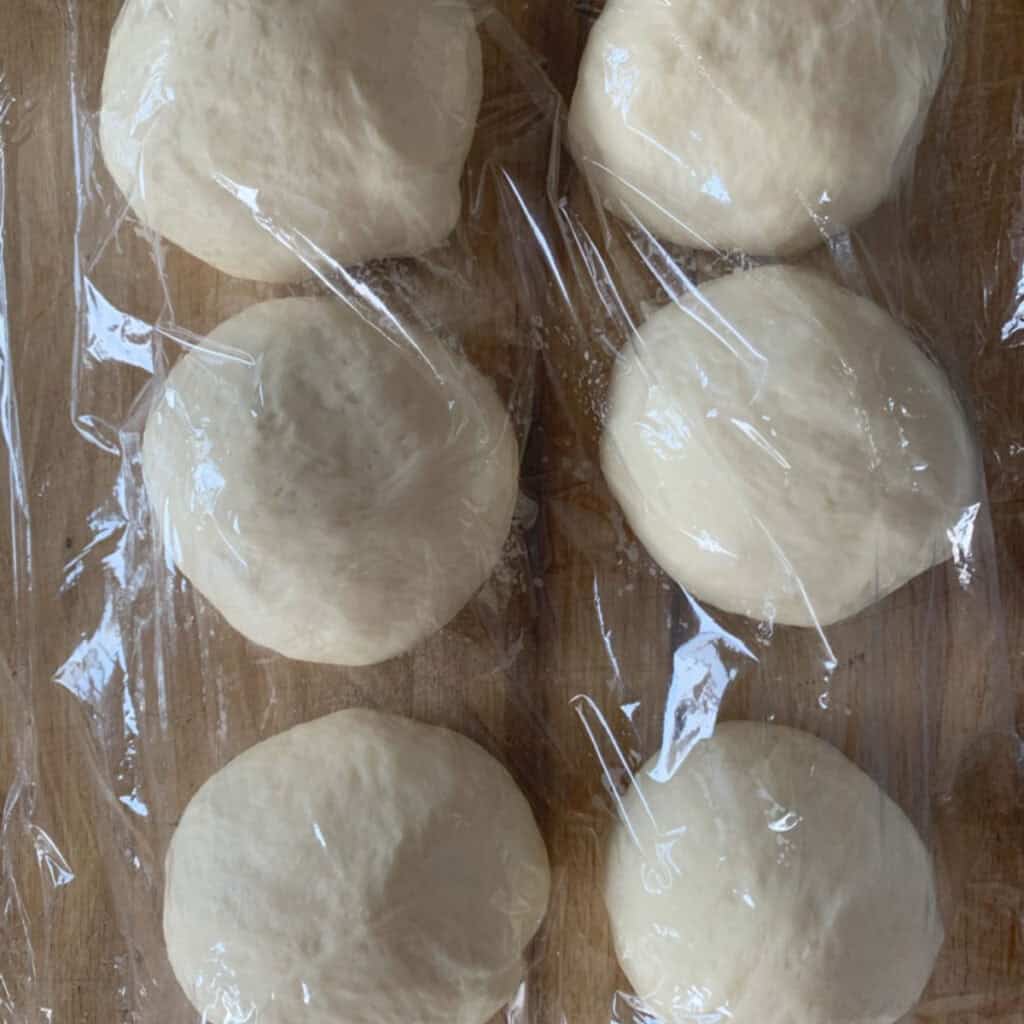
In a large bowl, dissolve the salt in the lukewarm water. Gradually add the flour and stir until all combined. Transfer to a lightly floured surface and knead until the dough is smooth, soft, and elastic. It should spring back slowly when you press a finger into it. Oil the bowl, return the dough, cover, and rest for at least 30 minutes. When ready, divide into 6 equal pieces and shape into perfect balls.
Step 2: Prepare the Filling
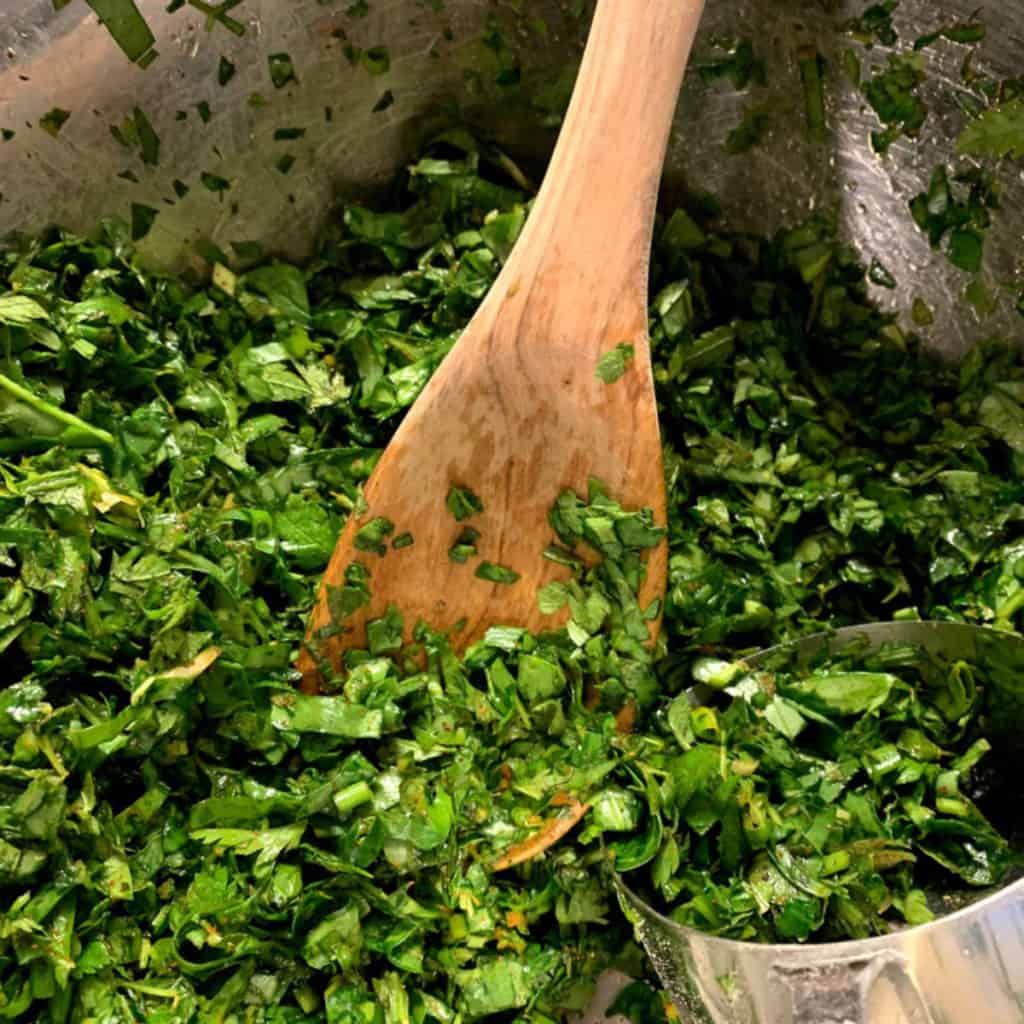
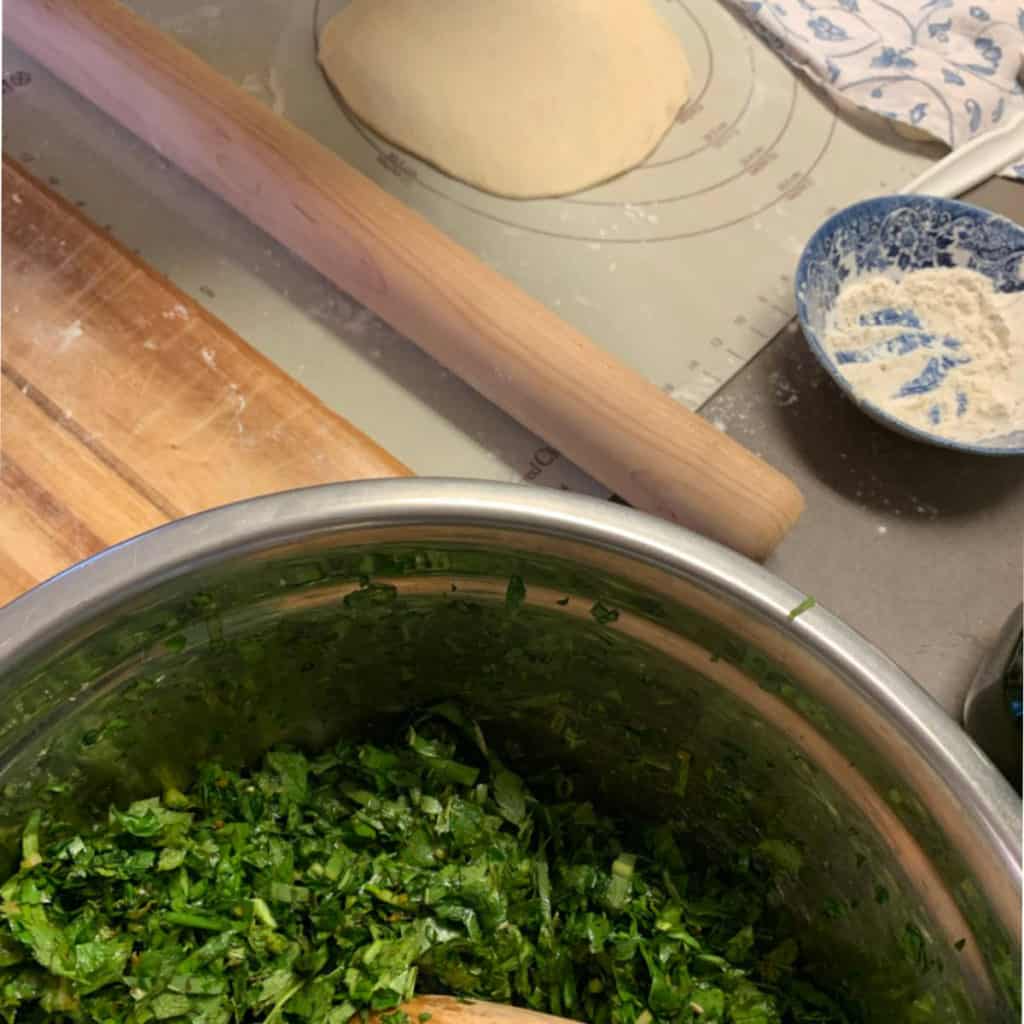
Remove any tough woody stems and chiffonade all the greens into thin ribbons. Combine all three tiers in a large bowl and toss together with your hands. You will have a very large, loosely piled mound – this is correct. Set aside until the moment of assembly. In a small bowl, combine the paprika, sumac, salt, and pepper flakes.
To make the filling, cut the tough and woody stems and chiffonade them. You will have a huge amount of chopped greens. You will need 2 cups of filling for each flatbread. It sounds like a lot, but during cooking, it will reduce drastically.
Once you have all the greens chopped, mixed them well with the best kitchen tool, your hands.
Leave the filling aside until ready to use. You don’t want to season beforehand (so as to not unnecessarily draw the water out too soon.)
In a small bowl combine salt, pepper, paprika, sumac and set aside.
You will add the seasoning just before you start assembling.
Step 3: Roll the Dough, Fill and Seal
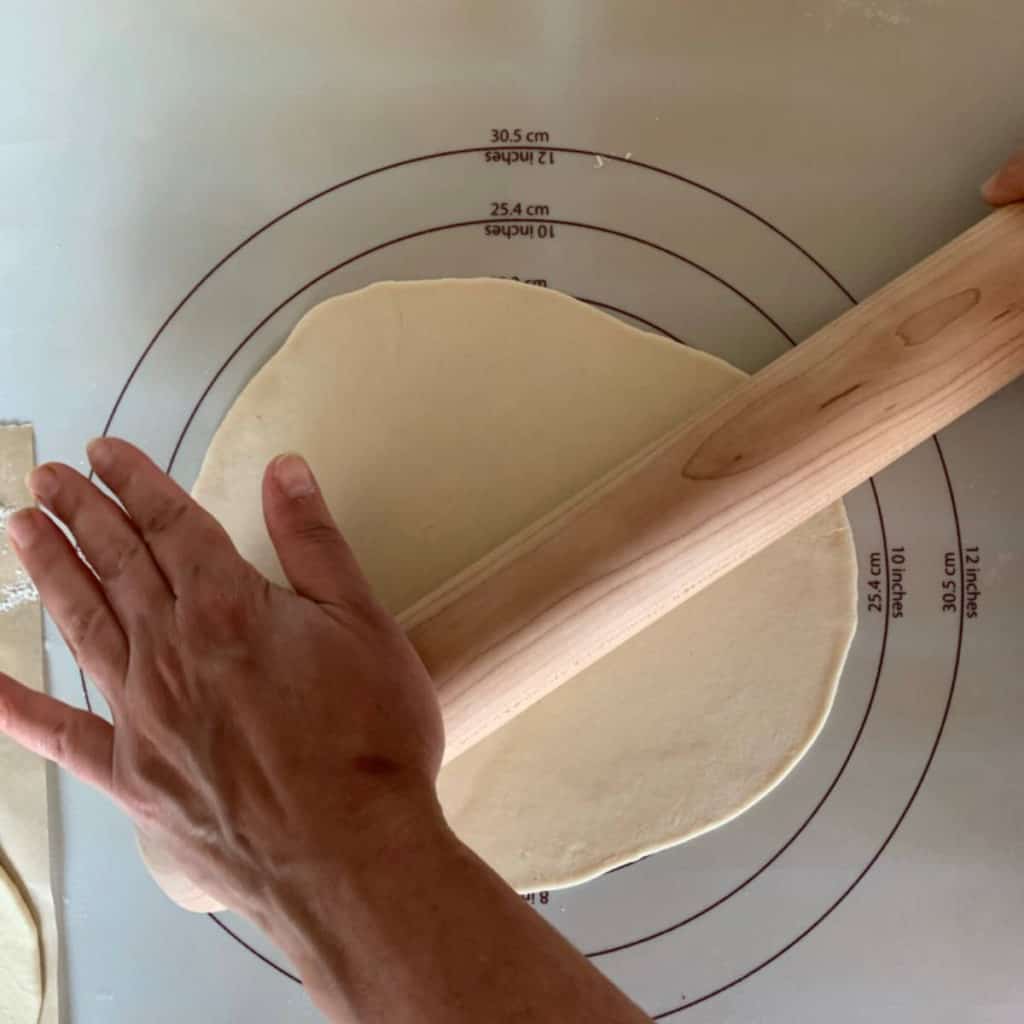

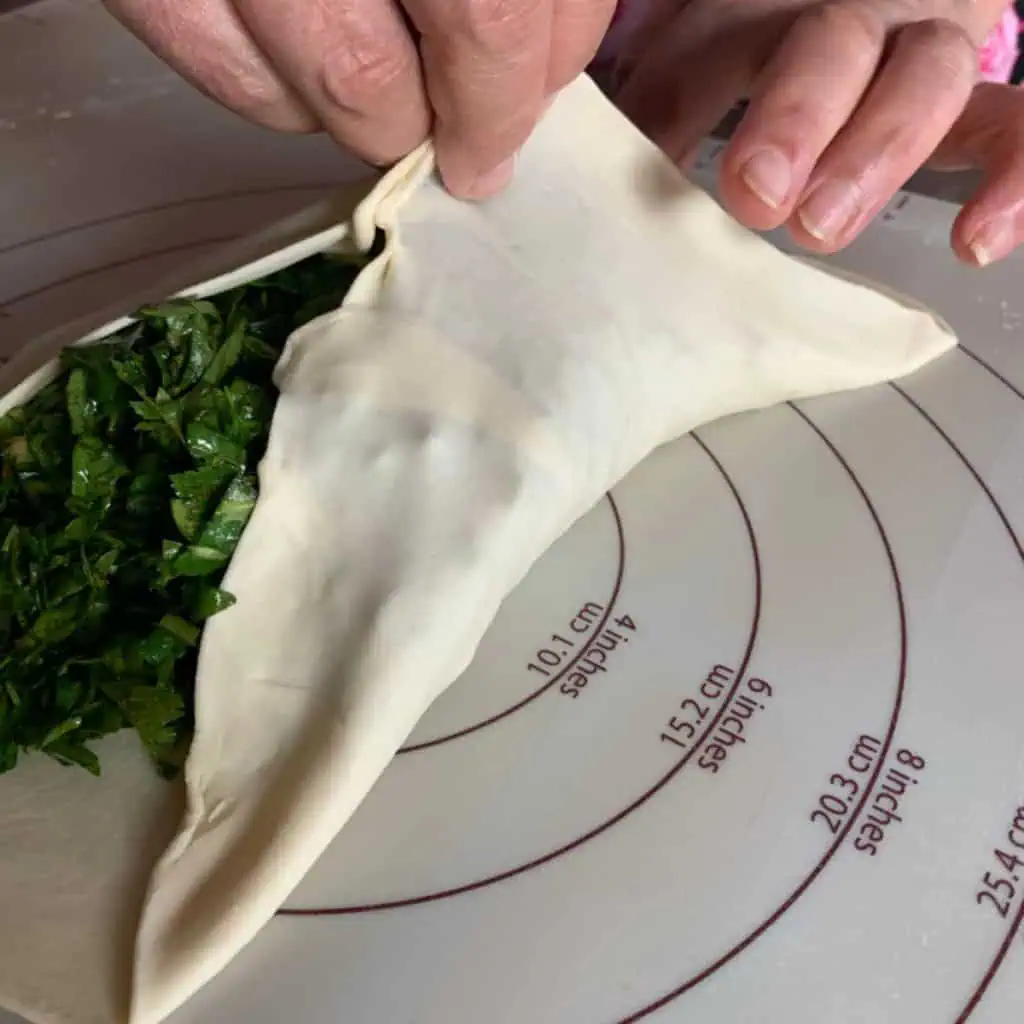
Roll each dough ball as thin as possible into an 8-inch circle. The dough should be almost translucent in places – this is what gives you that blistered, slightly charred crust. Check that the dough is not sticking to the surface by lifting the edges.
Dress the greens with the oil, lemon juice, and spice mix at the very last moment and toss to combine. Place 2 heaping cups of filling into the center of each circle – it will look like far too much. Pull the two long sides of the dough up and over the filling, pinching firmly in the center. Continue pinching the seam from the center outward to each tip, pressing as you go to push out any trapped air. You will have a rugby-ball shape.
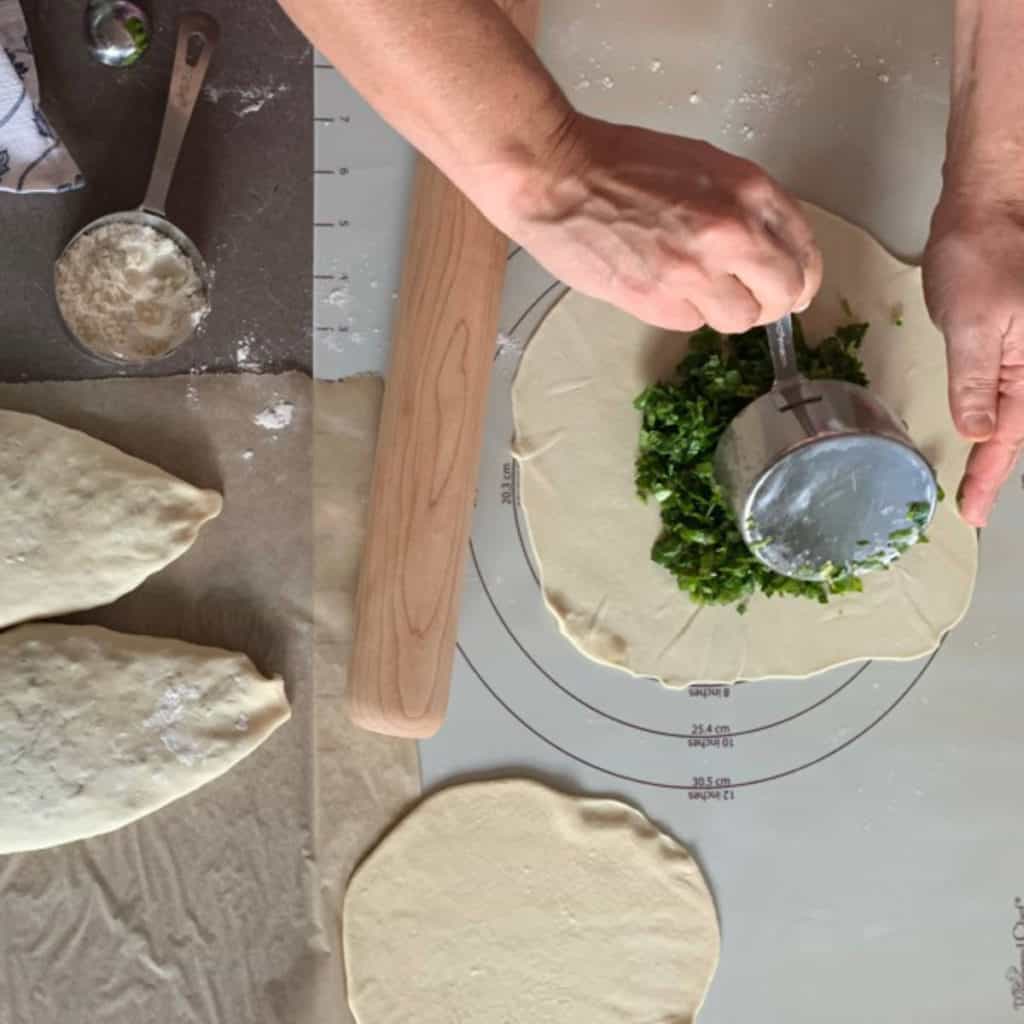
Step 4 Cook on the Griddle

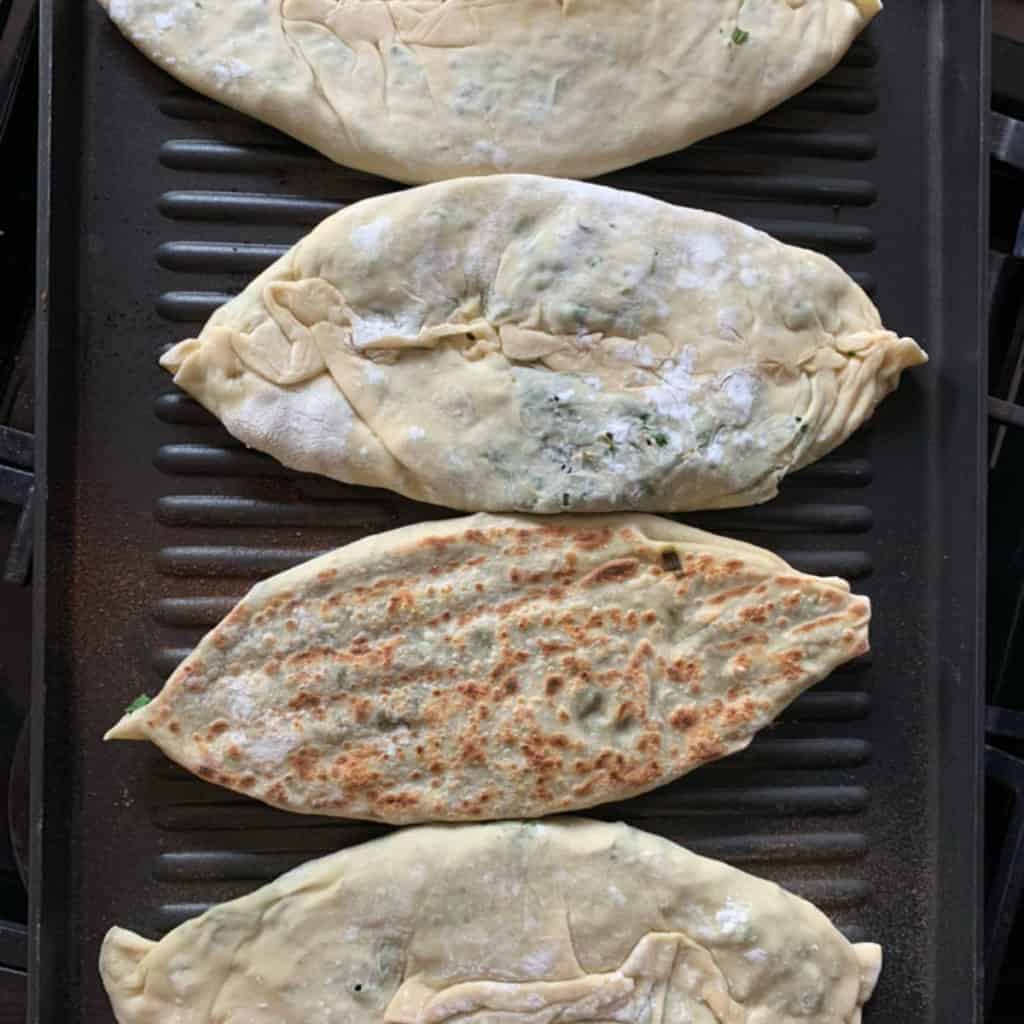
Preheat a dry cast-iron griddle or heavy skillet over medium-high heat until fairly hot. Place the hats seam-side down and cook undisturbed for 2–3 minutes until the underside is blistered, charred in spots, and releases cleanly from the pan. Flip and cook the second side for another 2–3 minutes. Turn once more if needed for even color. Press any puffed areas flat with a spatula so the dough cooks through where the greens are thickest.
The moment each flatbread comes off the griddle, brush generously with softened butter or olive oil (if opting for vegan option). Let it melt in for 30 seconds, then serve immediately.
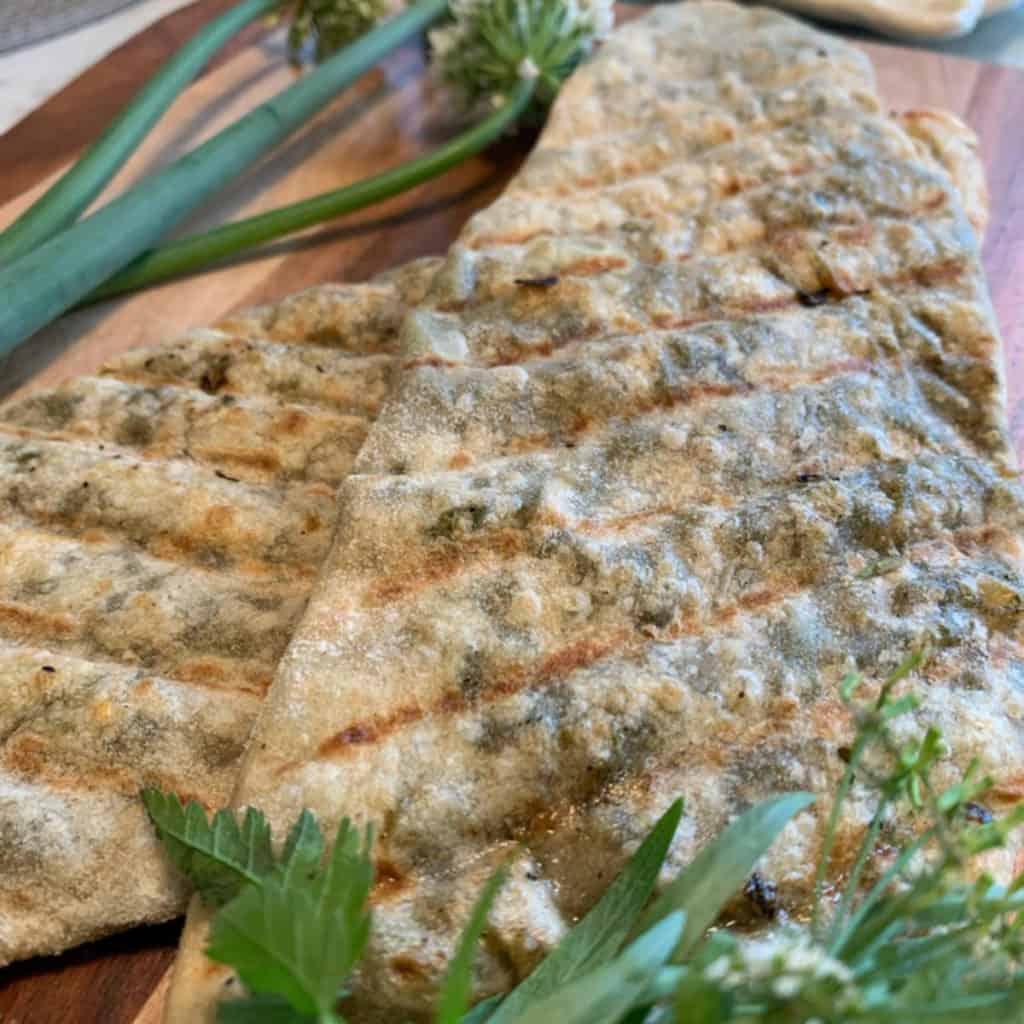
Serve whole for a dramatic table presentation, or sliced crosswise to show the layered, jewel-green filling. Serve with cool garlic yogurt on the side.
Frequently Asked Questions
Can I make Jingalov Hats with fewer than 8 varieties of greens?
Technically yes, and sometimes the season simply doesn’t offer more. The key is still to reach for variety rather than defaulting to a single green. Spinach, Swiss chard, and beet greens are available year-round and make a reliable base. Fresh herbs from the produce section such as dill, cilantro, parsley, tarragon are viable choice. A bunch of of dandelion greens, if you can find them, adds that edge of bitterness that makes the filling feel complete.
Can Jingalov Hats be made vegan?
In its core, jingalov hats is vegan. The filling and dough are already completely vegan. The only non-vegan element is the butter used for finishing. Simply substitute with a good quality olive oil or vegan butter brushed on while still hot, and the dish is entirely plant-based.
How do I store and reheat leftovers?
Cool completely before storing. Stack with parchment between each flatbread and wrap tightly. They keep at room temperature for up to 6 hours, or refrigerated for up to 2 days. Reheat in a dry cast-iron pan over medium heat for 2 minutes per side. Never reheat in the microwave, which will make them soft. The reheated version will not have the same blistered crust as fresh, but the flavor remains excellent.
Can I freeze Jingalov Hats?
Yes. Freeze fully cooked flatbreads individually wrapped, without the butter, for up to 1 month. Reheat from frozen in a dry pan over low-medium heat, covered loosely, for 4–5 minutes per side. Add the butter after reheating.
More Armenian Breads & Herb Traditions
Jingalov Hats is the bread that carries the entire green tradition of Armenian cooking inside it – ten or more herbs in a single flatbread. These are the recipes that share its season, spirit, and ingredients.
Recipes highlighting forage greens
More from the Armenian Table
Jingalov Hats – Stuffed Flatbread Loaded with Greens

Ingredients
Dough
- ⅔ cup 150 ml lukewarm water
- 1 tsp kosher salt
- 1½ cups all-purpose flour 200 g plus more for dusting
Filling
- 8 heaping cups 500g of finely sliced greens and herbs see bottom of the recipe for suggestions
- 2 teaspoon sweet paprika
- 1 teaspoon kosher salt
- ½ teaspoon red pepper flakes optional
- 1 tablespoon grape seed oil
- 1 tablespoon lemon juice
- Mixed greens * see note
Instructions
Making the dough
- In a large bowl sift 1 ½ cups of flour. Dissolve the salt in a ¾ cup of the lukewarm water and add to the flour.
- Stir until combined. Transfer the dough onto a floured counter and continue kneading by hand until it becomes smooth and elastic. Form into a ball and place back into the bowl.
- Cover and let it rest for 30 minutes to an hour.
- When ready to make the bread, divide the dough into 6 equal parts and form into a ball.
- Roll each ball as thin as possible into 6-7 inch diameter circles.
- Roll each ball as thin as possible into 8-inch diameter circles.
Make the filling
- Chiffonade all the greens into thin ribbons and mix them all together.
Assembling
- Once ready to make the bread, season with salt pepper, paprika, oil and lemon juice.
- Place 1½-2 cups of the greens into each round.
- Bring the two sides of the wide ends of the dough and pinch in the middle.
- Continue pinching all the way to one tip and then the other, press to squeeze out the air.
- Turn it seam side down and flatten it with your hand first and then gently roll with the rolling pin. You will have four rugby-shaped jingalov hats ready to go.
- Pre-heat the griddle until fairly hot, place the hats seam side down and cook undisturbed for 2-3 minutes until the flatbread is blistered.
- Turn to the other side and cook for another 2-3 minutes until the dough is cooked evenly. Turn the bread 1-2 times until its nicely browned on both sides.
- Brush softened butter on hot bread and let it melt into it.